
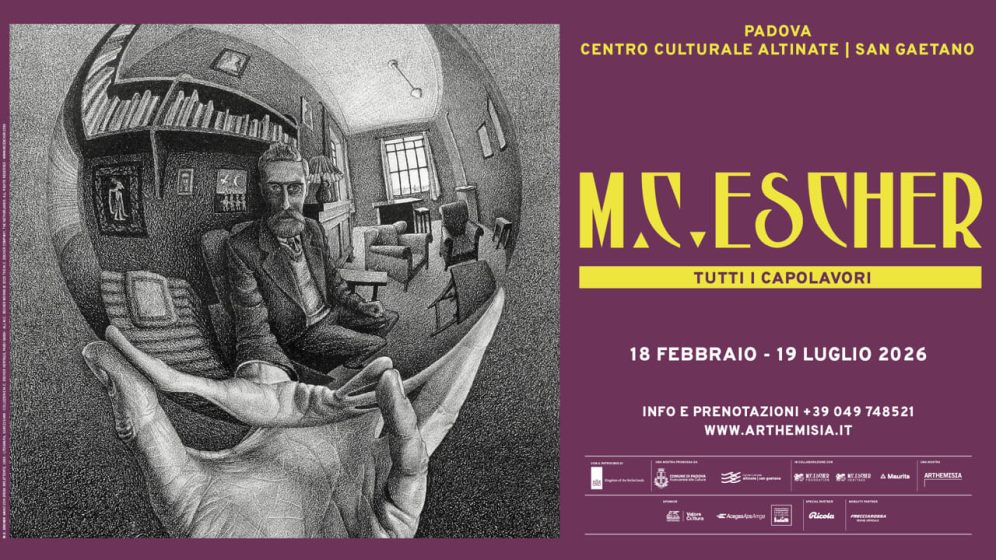
Until July 19, 2026, the Centro Culturale Altinate San Gaetano in Padua hosts “M.C. Escher – All the Masterpieces,” the largest and most comprehensive exhibition ever dedicated to the famous Dutch artist.
An unmissable opportunity to discover the visionary universe of Maurits Cornelis Escher, master of impossible geometries, capable of blending art, mathematics, perception, and visual poetry into a unique and still astonishing language.
Promoted by the Municipality of Padua and curated by Federico Giudiceandrea, one of the world’s leading collectors and experts on Escher, the exhibition guides visitors through a fascinating journey across the artist’s creative evolution: from his beginnings as a landscape artist to his most famous works that revolutionized the way space, infinity, and reality are represented.

- Why visit the Escher exhibition in Padua
- Who was M.C. Escher
- The story of his work and his experiences in Italy and Spain
- Escher: the artist who fascinated even the world of rock
- The Escher exhibition in Padua: what to see
- The 8 sections of the exhibition
- Videos, installations, and interactive paths
- The virtual reality experience at the Civic Museums of the Eremitani
- Escher exhibition in Padua: an event not to be missed
Why visit the Escher exhibition in Padua
Because the exhibition is set up in the city center, in the exhibition halls on the first floor of the San Gaetano Cultural Center, a bright location perfectly suited to host an exhibition path made of reflections, stairs, orientations, and optical illusions.
And because its central location also makes it ideal for planning a cultural weekend in Padua: after the visit, you can continue your day among historic squares, museums, elegant cafés, and artistic itineraries in the heart of the city.
It is therefore an excellent opportunity for:
- 20th-century art lovers
- people who are fascinated by mathematics and geometry
- anyone looking for an original exhibition in Padua
- people who want to add a cultural stop to their weekend in the city
A perfect exhibition to combine with a stay in Padua—perhaps in our short-term rental apartments!
Who was M.C. Escher
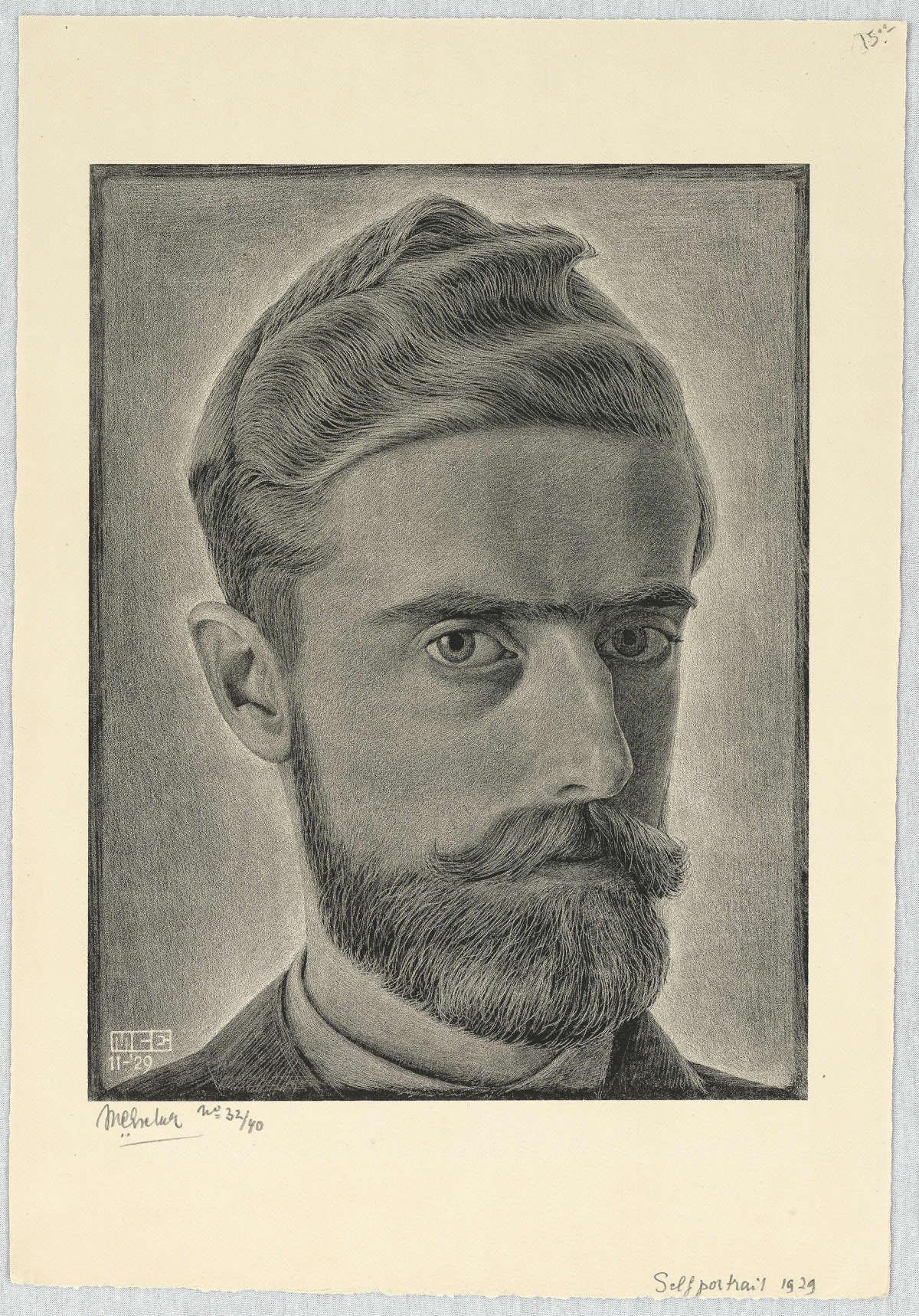
Maurits Cornelis Escher (1898–1972) was one of the most original and recognizable artists of the 20th century.
Dutch, introverted, and extraordinarily brilliant, Escher created in his works a world where art, science, geometry, physics, and design coexist in perfect balance. His images continue to fascinate scholars, architects, and art lovers to this day.
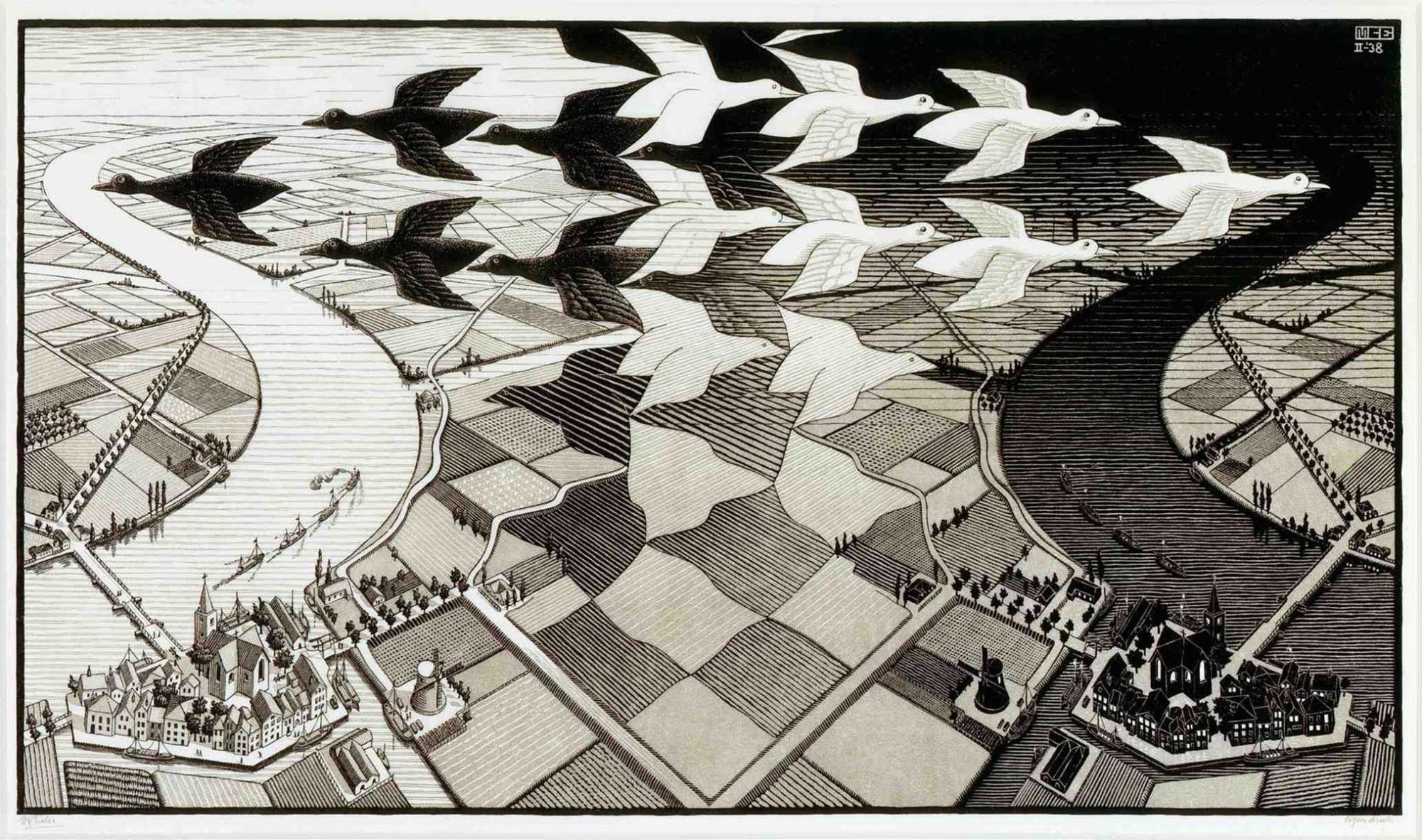
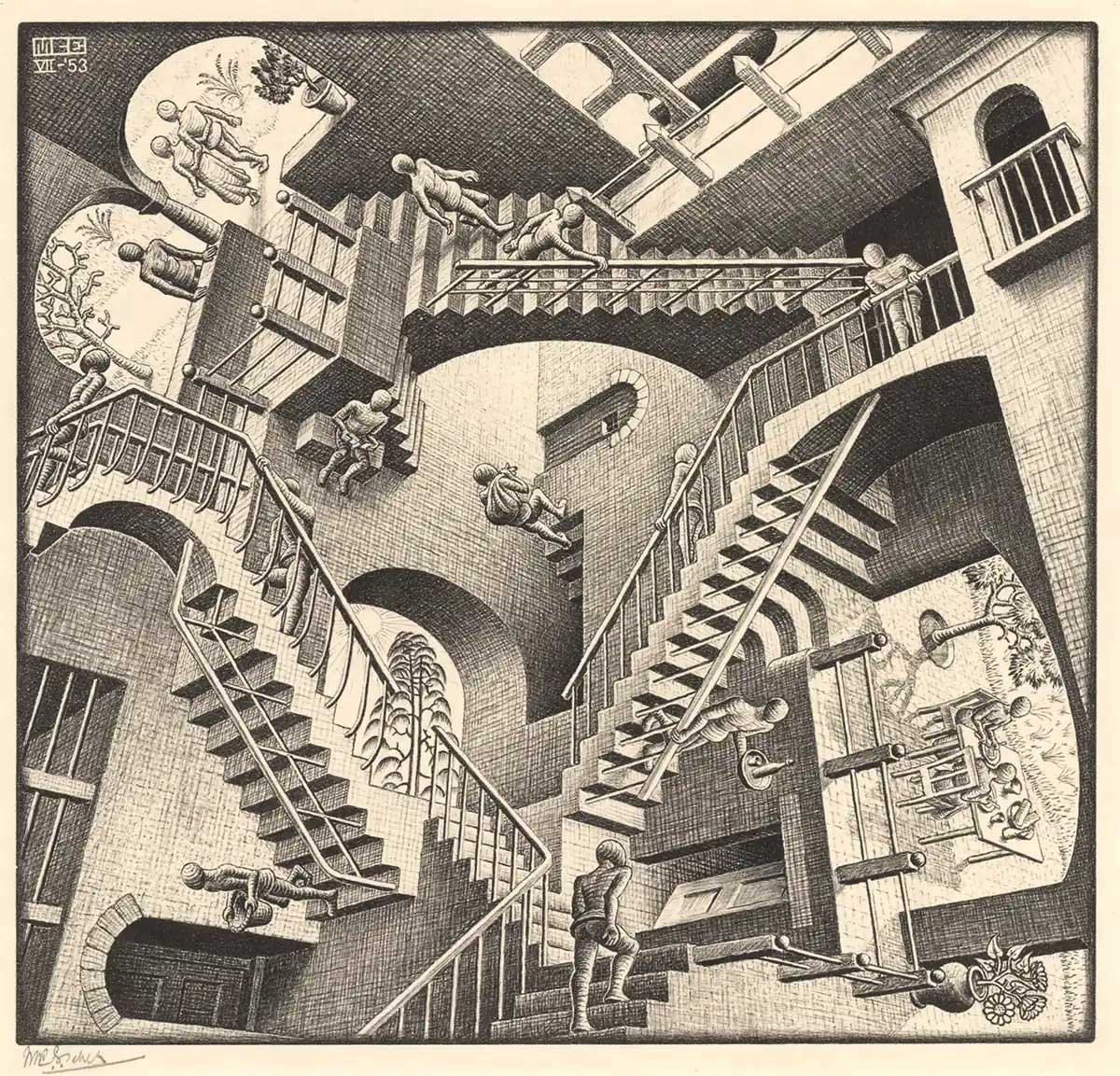
His most famous works—such as Relativity, Day and Night, Metamorphosis II, Ascending and Descending, and Drawing Hands—have become true icons of contemporary visual culture.
The story of his work and his experiences in Italy and Spain
One of the most interesting aspects of Escher’s life is his deep connection with Italy.
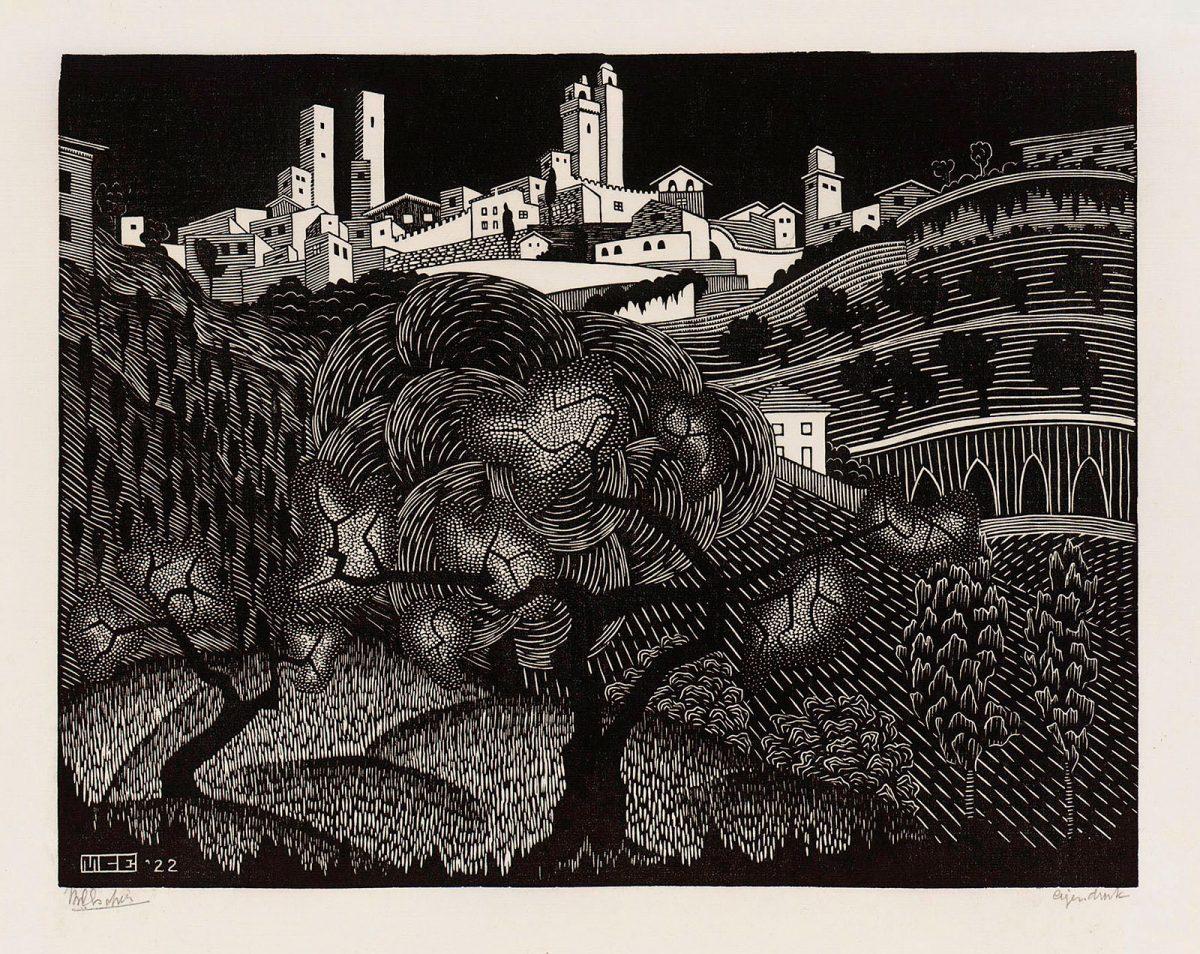
After his training in the Netherlands, the artist lived in Italy from 1922 to 1935, finding in its landscapes an inexhaustible source of inspiration. Medieval villages, historic architecture, and light effects were fundamental to the development of his style.
It was precisely by observing these landscapes that Escher began to reflect more and more intensely on space, perspective, and visual perception.
Another important moment in Escher’s development came in 1936 when, during a trip to Spain, he was deeply impressed by the Moorish mosaics of the Alhambra in Granada. From this experience arose his interest in tessellations—geometric patterns that repeat infinitely without leaving empty spaces.
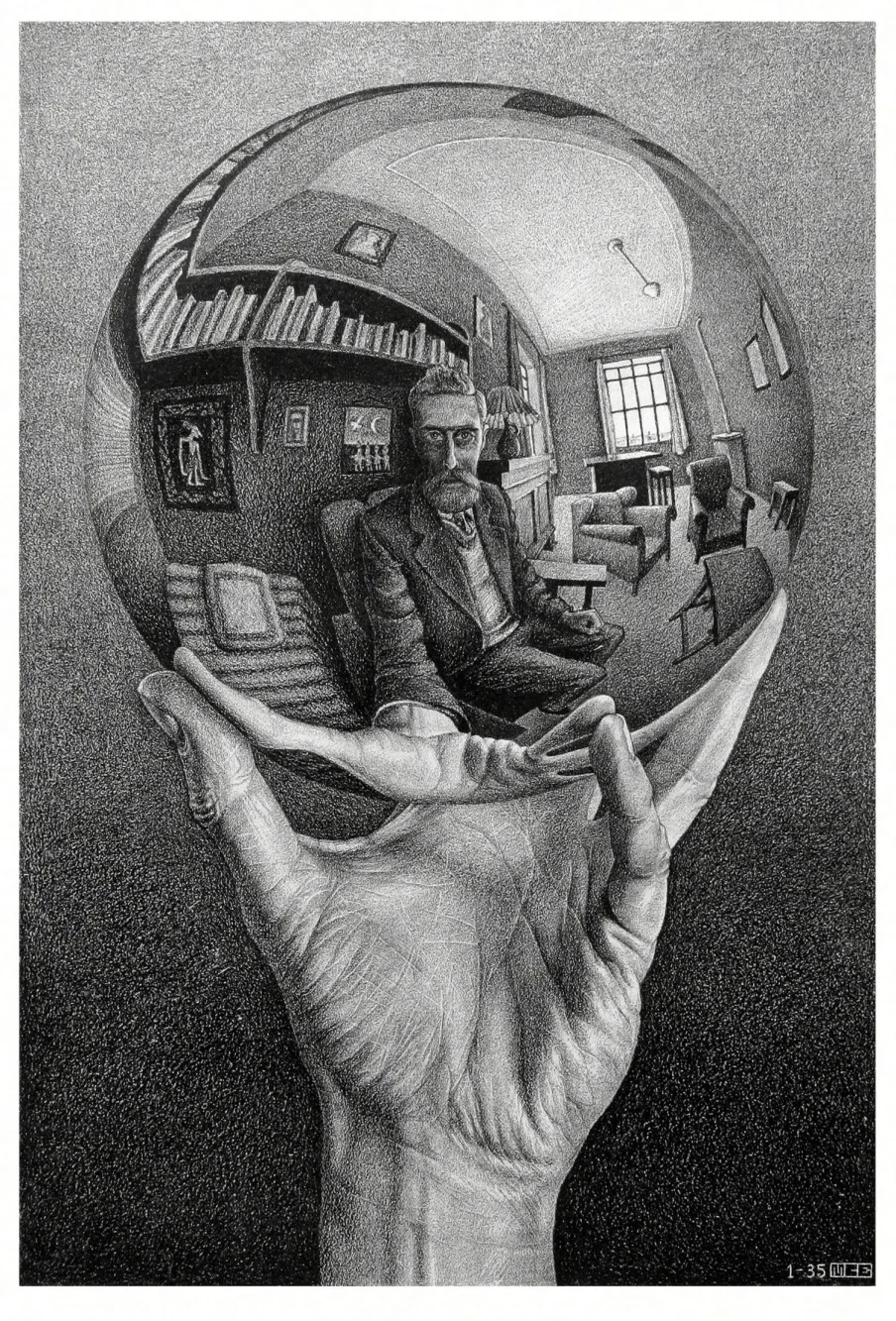
In the following years, he returned to the Netherlands, where he created many of his most famous and visionary works—such as Relativity, Metamorphosis II, Hand with Reflecting Sphere—and where he died in 1972.


Escher: the artist who fascinated even the world of rock

Escher also became a point of reference for the general public and pop culture.
His images, with their psychedelic appeal, deeply influenced the world of graphics, design, cinema, advertising, and music.
Among the most curious anecdotes linked to his fame is his refusal to collaborate with Mick Jagger, who had asked him to design the cover of the Rolling Stones album “Let It Bleed”. Escher declined, while he did allow one of his images to be used for the Pink Floyd album “On the Run”.
The Escher exhibition in Padua: what to see
The Padua exhibition has been described as one of the most complete and significant ever created on Escher.
The exhibition features over 150 works, including woodcuts, lithographs, linocuts, and engravings.
These are accompanied by videos, educational materials, in-depth insights, and immersive installations that help visitors understand the creative process and the mathematical principles behind his works. You will see stairs that become infinite, spaces that fold in on themselves, reflective surfaces that multiply viewpoints, and realities that transform into paradoxes.
The 8 sections of the exhibition
The exhibition is divided into eight thematic sections, allowing visitors to follow Escher’s artistic evolution clearly and completely.
- The beginnings: early works influenced by Art Nouveau and Symbolism
- The Italian period: the thirteen years Escher spent in Italy, which he considered as the most beautiful of his life
- Tessellations: geometric figures and animals repeating infinitely and fitting perfectly together
- Metamorphoses: transformations of objects, animals, and shapes into new images
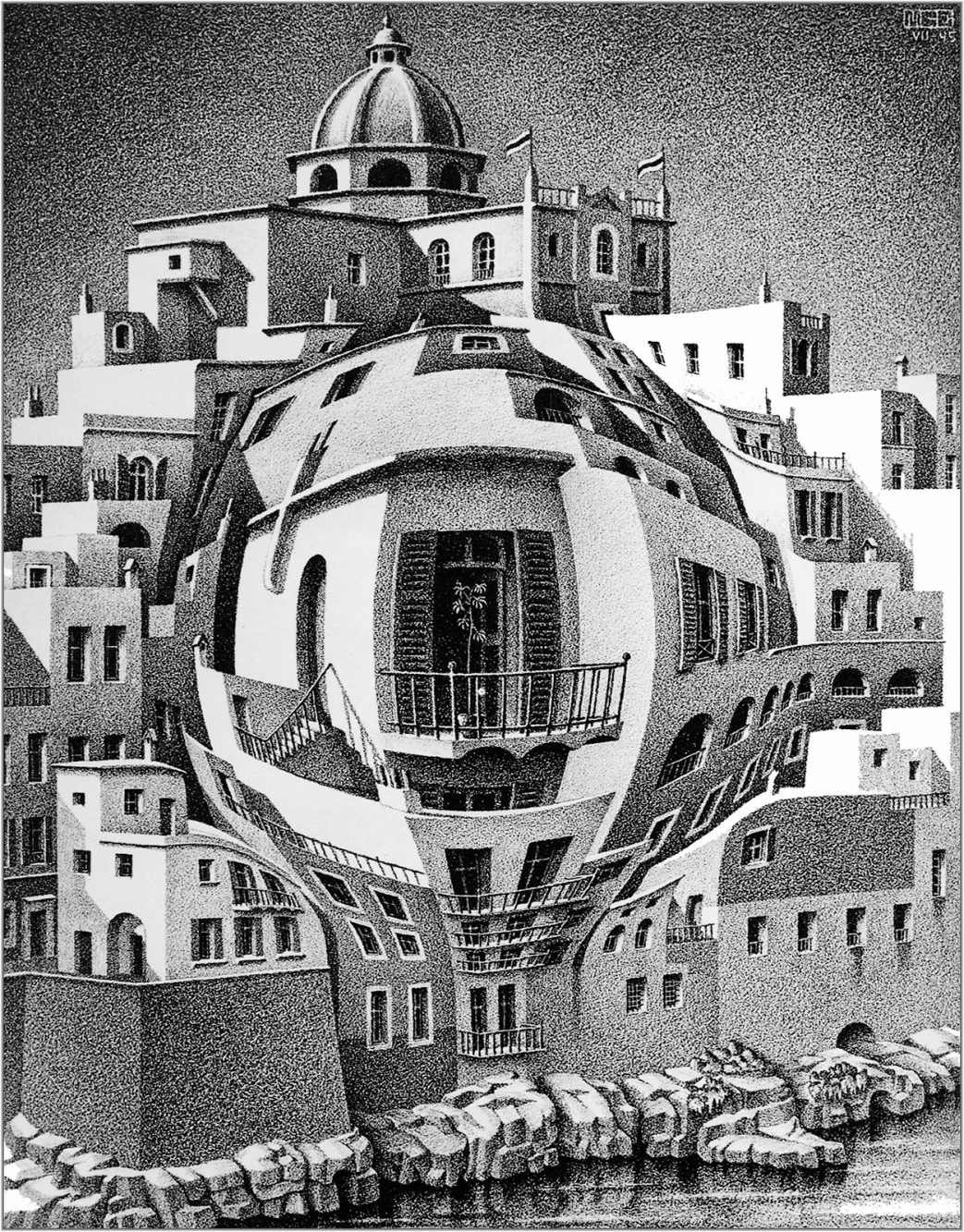
- The structure of space: works focused on spheres, regular solids, reflective surfaces, and geometric constructions
- Commissioned works: logos, graphic design works, and decorations created for institutions and companies (for example, decorations for the post office in The Hague)
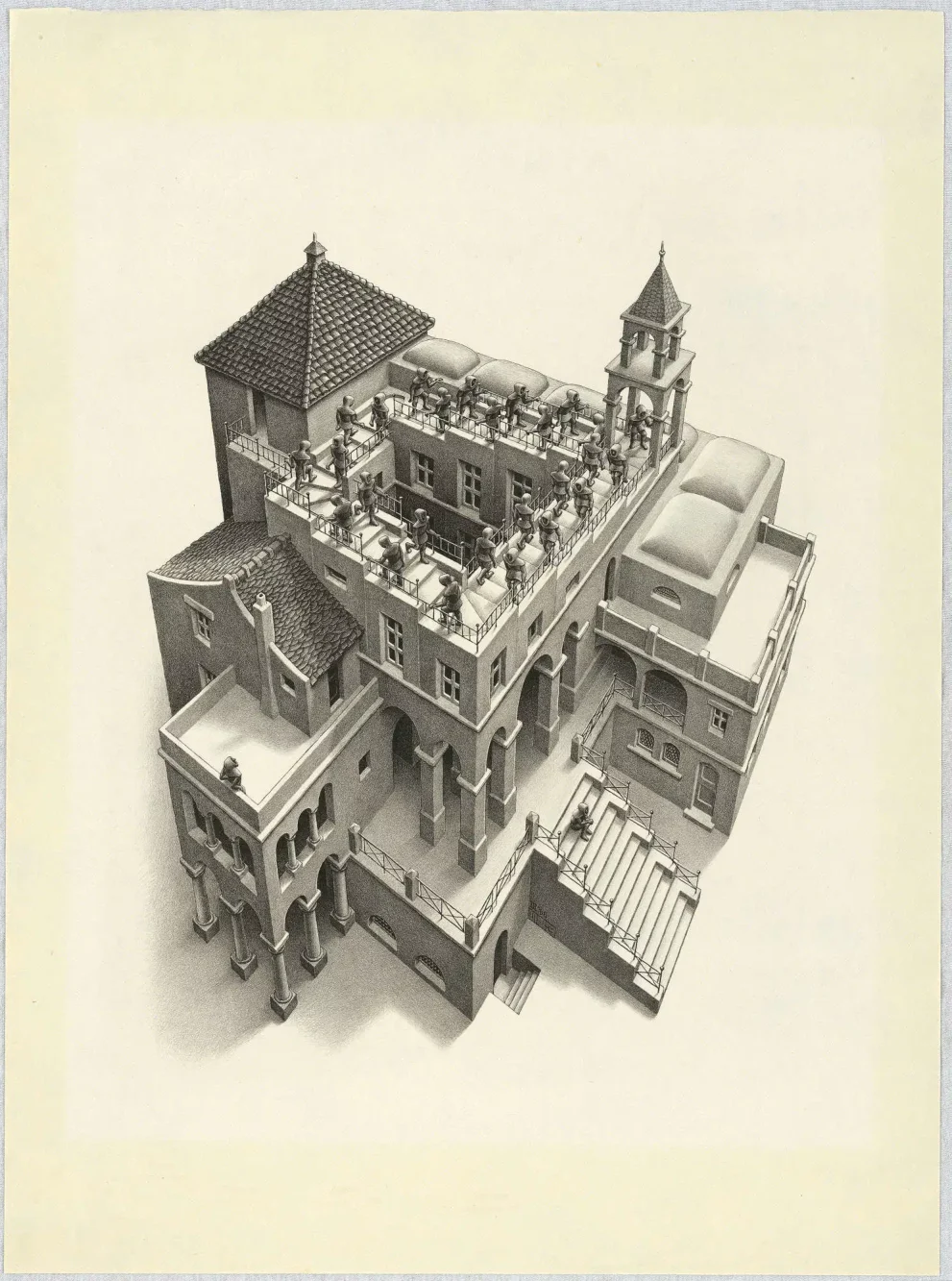
- Geometric paradoxes: featuring his most famous masterpieces, such as “Relativity”, “Waterfall”, “Ascending and Descending”
- Eschermania: a section dedicated to Escher’s popularity in the 1960s and his influence on psychedelic and pop culture
Videos, installations, and interactive paths
One of the most interesting aspects of the exhibition is the presence of numerous multimedia contents and interactive installations.
These tools help visitors better understand complex concepts such as:
- symmetry
- infinity
- perceptual ambiguity
- geometric transformation
- optical illusion
In this way, the visit becomes not only fascinating but also engaging and suitable for all ages.
The virtual reality experience at the Civic Museums of the Eremitani
To complete the Escher experience in Padua, there is also an extraordinary virtual reality installation at the Civic Museums of the Eremitani.
Here, visitors can literally step inside Escher’s works, exploring impossible architectures—stairs that go up and down at the same time, rooms that change orientation, and perspectives that suddenly reverse.
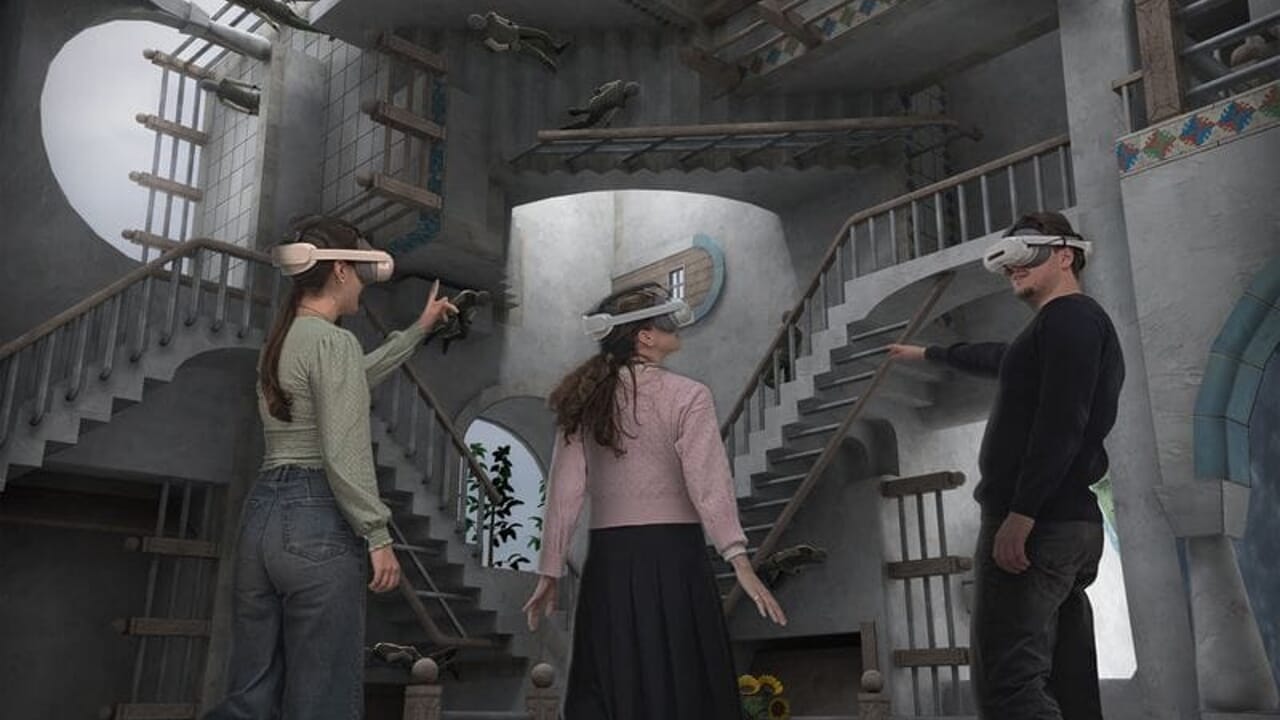
An immersive experience that makes it even clearer how Escher’s work is not only to be “looked at”, but also to be lived and experienced.
Escher exhibition in Padua: an event not to be missed
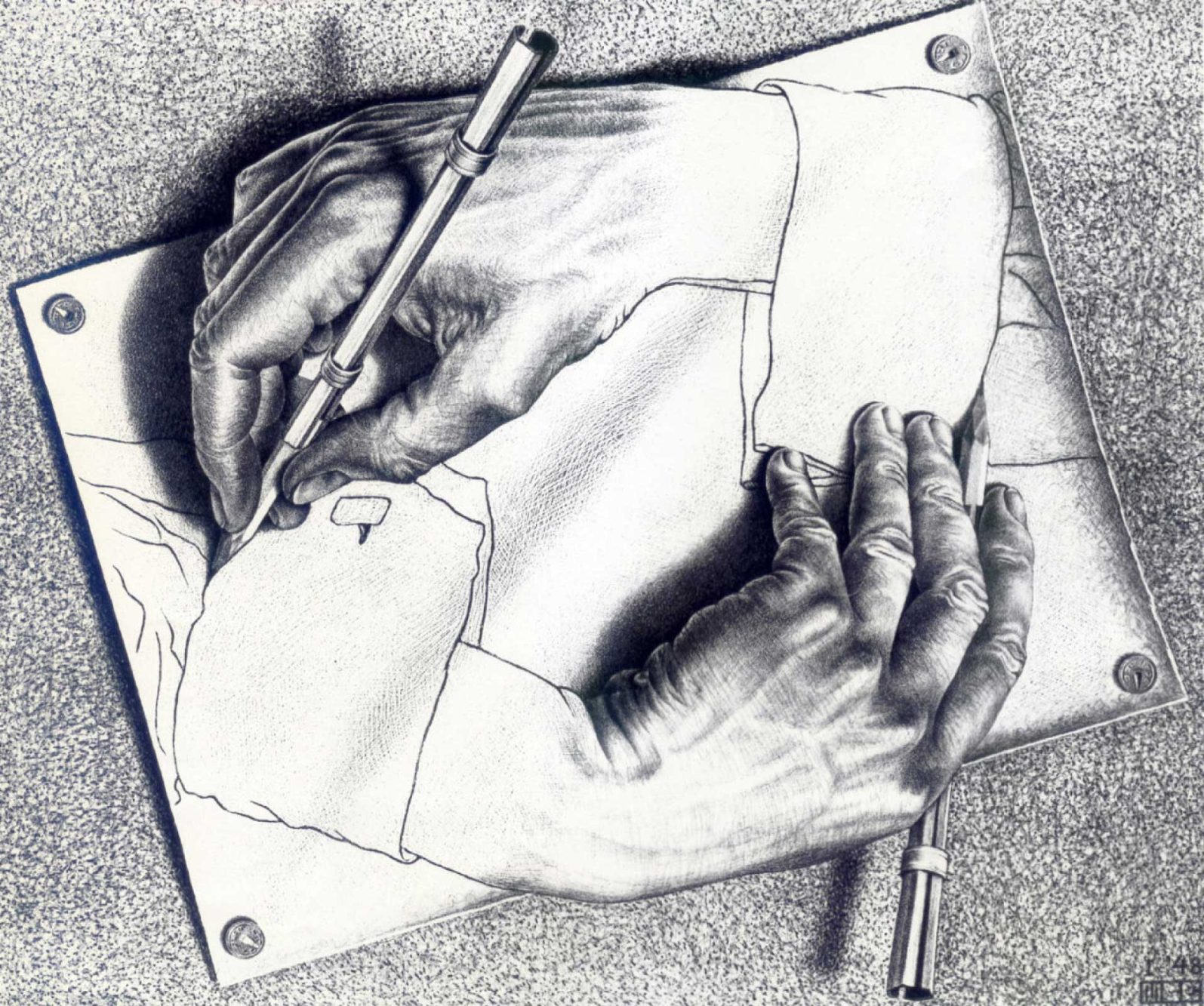
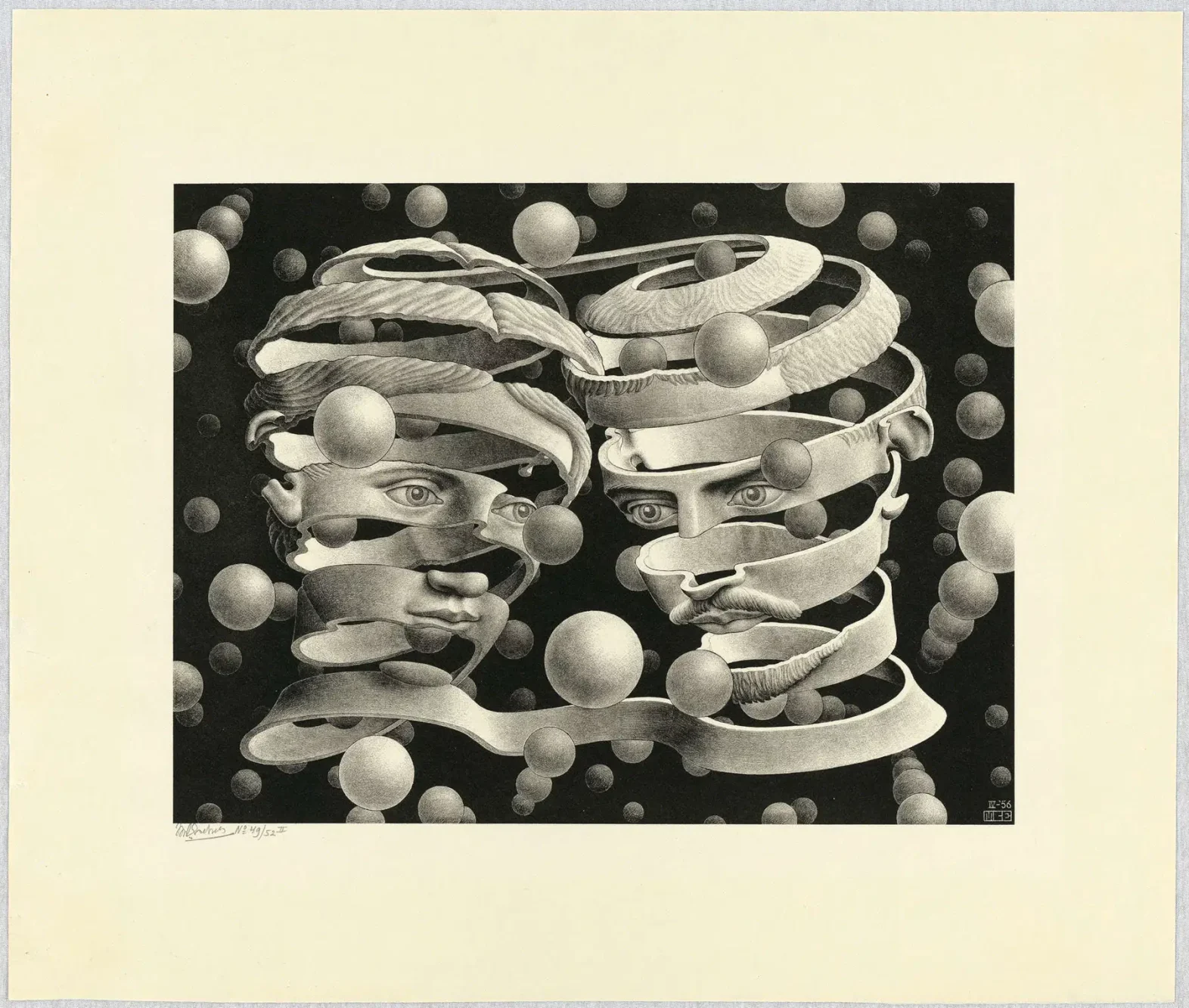
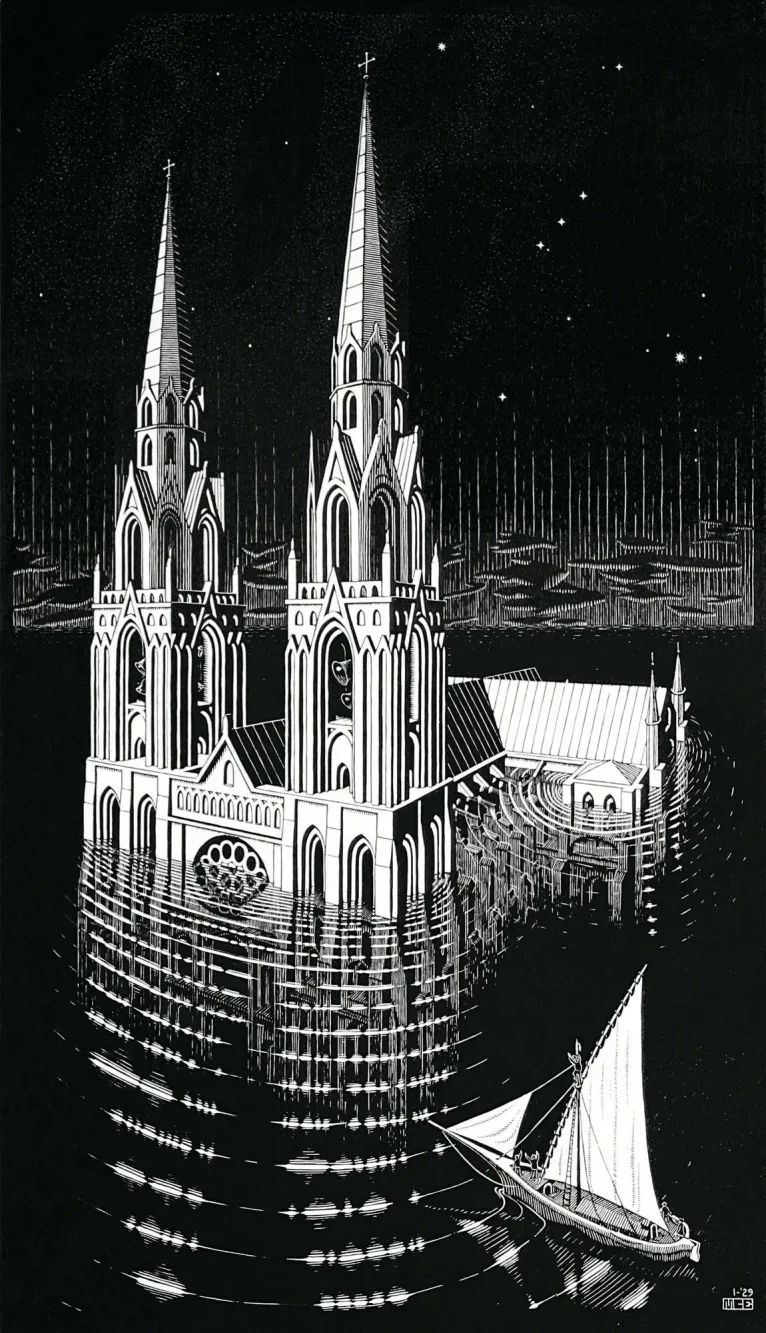
If you are looking for things to see in Padua in 2026, this exhibition is undoubtedly one of the most interesting cultural events of the year.
Between masterpieces, optical illusions, installations, and virtual reality, “M.C. Escher – All the Masterpieces” is an exhibition capable of surprising, intriguing, and making you think.
And you? Are you ready to enter Escher’s impossible world?
🎟️ Useful information for visiting the exhibition “M.C. Escher – All the Masterpieces”
📍Where the exhibition is located
Centro Culturale San Gaetano, Padua
Via Altinate, 71
Distance from ApartmentsPadova: see map
🗓️ Opening Hours
From February 18 to July 19, 2026
Monday: 2:30 PM – 7:30 PM
Tuesday to Sunday: 9:00 AM – 7:30 PM
(ticket office closes one hour earlier)
Info & reservations:
www.arthemisia.it
+39 049 748521
info@arthemisia.it
Photo credits:
itinerarinellarte.it
finestresullarte.info
escherinhetpaleis.nl
costruirecultura.com
arthive.com