
The Palazzo del Bo and the University of Padua: a journey through knowledge, freedom, and history
Whyle strolling through the heart of Padua, between Caffè Pedrocchi and Palazzo Moroni, it is impossible not to come across one of the city’s most important places: Palazzo del Bo, the historic seat of the University of Padua.
But what makes this building so special? Not only its beauty, but above all the centuries of history, science, and freedom it preserves.

- The University of Padua, one of the oldest in Europe
- The great names that made history
- From medieval inn to heart of the University
- What to see during a visit to Palazzo del Bo
- The New Courtyard and contemporary art
- One last ritual: the “Polifonico” at Mario’s
- Why you should visit Palazzo del Bo
The University of Padua, one of the oldest in Europe
Founded in 1222, the University of Padua is one of the oldest in Europe and was born from a courageous act: students and professors left Bologna to create a university free from Church interference.
Hence comes the famous motto that still sums up its spirit today:
“Universa Universis Patavina Libertas”,
that is, “Complete freedom for everyone at the University of Padua”.
A revolutionary principle for its time, which made the Paduan university the first in Europe to welcome Jewish and Protestant students, allowing them to graduate without renouncing their faith.
The great names that made history
Some of the greatest figures in scientific and cultural history studied or taught at the University of Padua, including:
- Nicolaus Copernicus
- Andreas Vesalius
- Galileo Galilei
- Giovanni Battista Morgagni, founder of pathological anatomy
- William Harvey, who here deepened his studies on blood circulation
Two records above all:
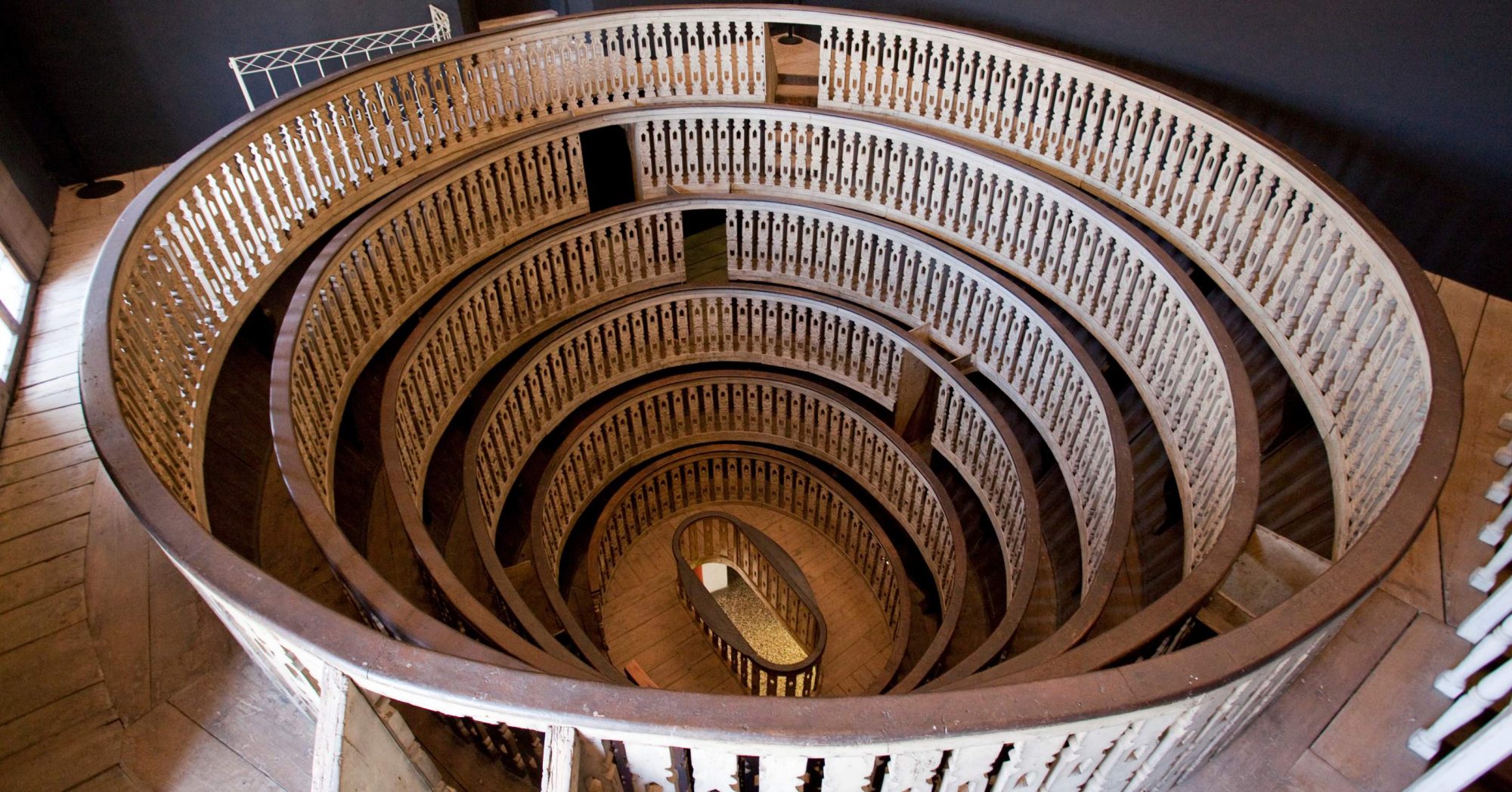
in 1594, the first permanent anatomical theatre in the world was created in Padua.
And in 1678, Elena Cornaro Piscopia graduated here, the first woman in history to obtain a university degree.
From medieval inn to heart of the University
The name “Bo” always arouses curiosity. Where does it come from?
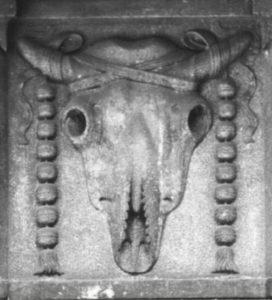
Before becoming a university building, this was the site of an inn called Hospitium Bovis, the “Inn of the Ox”, named after the sign bearing an ox skull (“bovis” is “bo” in local dialect).
It was a good-quality inn, with attached stables, frequented by travellers and merchants. In 1405 it was donated to a butcher by Francesco I da Carrara to thank him for the meat he had offered to soldiers and citizens during the siege, and in 1539 it was purchased by the University, which demolished the building to construct Palazzo del Bo.
The bucranium, the ox skull, thus became the symbol of the University and of its lively student traditions.
What to see during a visit to Palazzo del Bo
Visiting Palazzo del Bo is like stepping into a living, breathing history book.
The Old Courtyard (Cortile Antico)
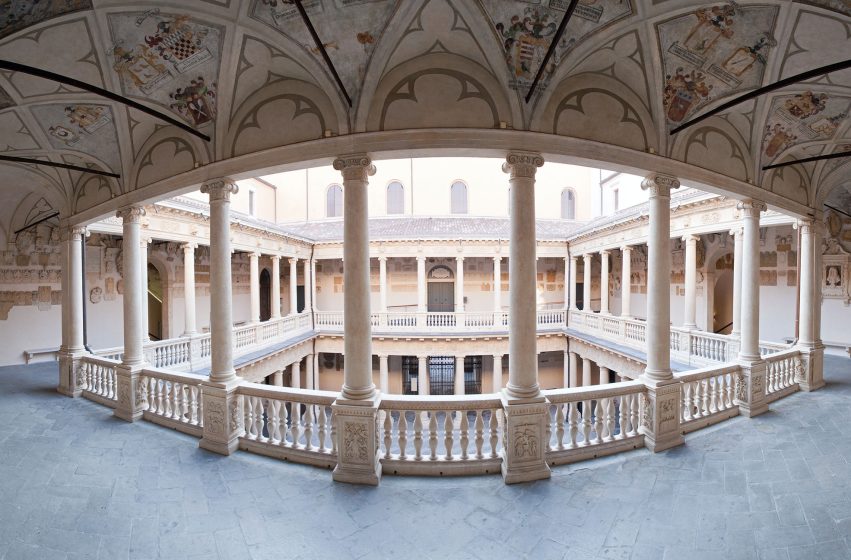
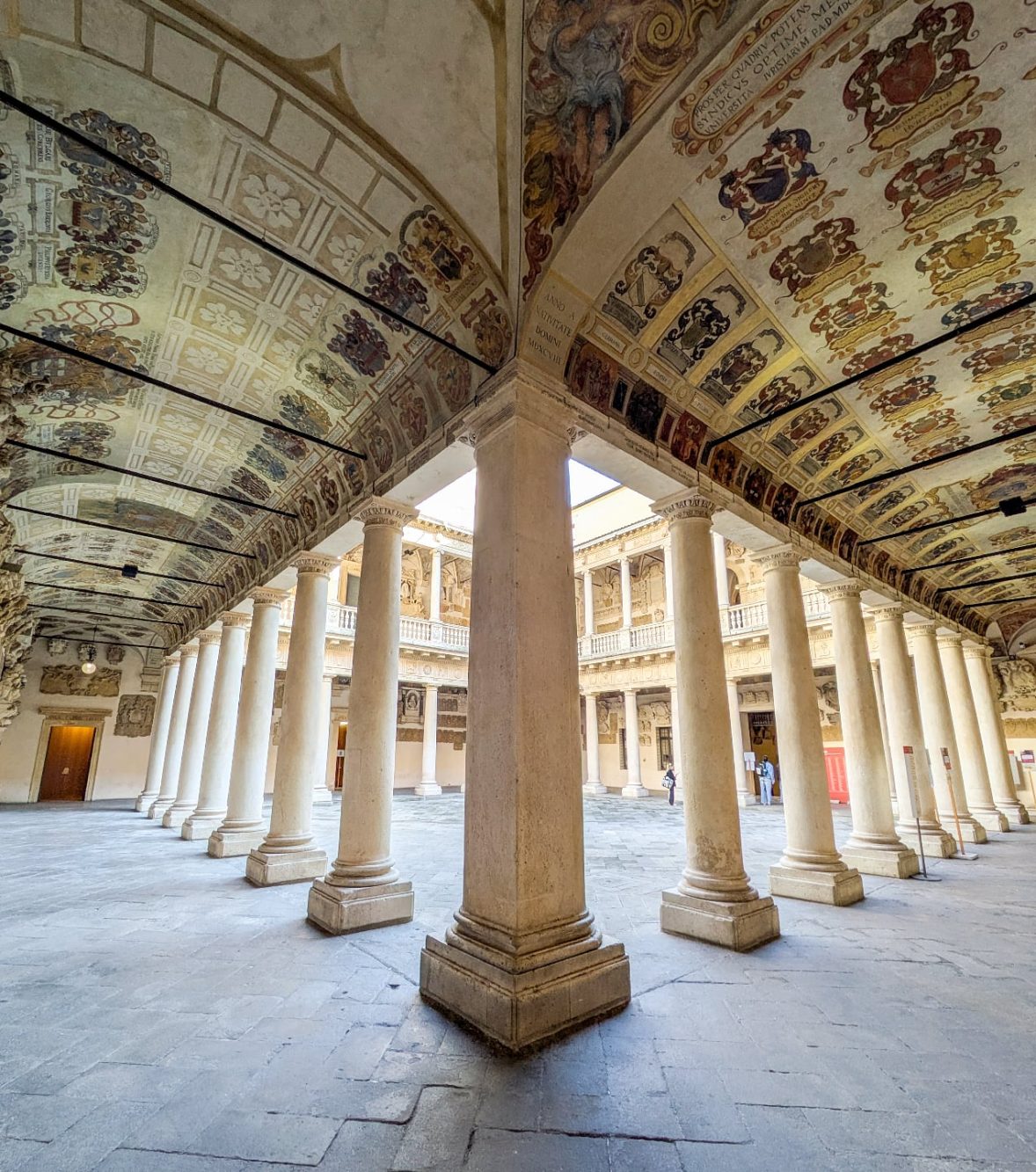
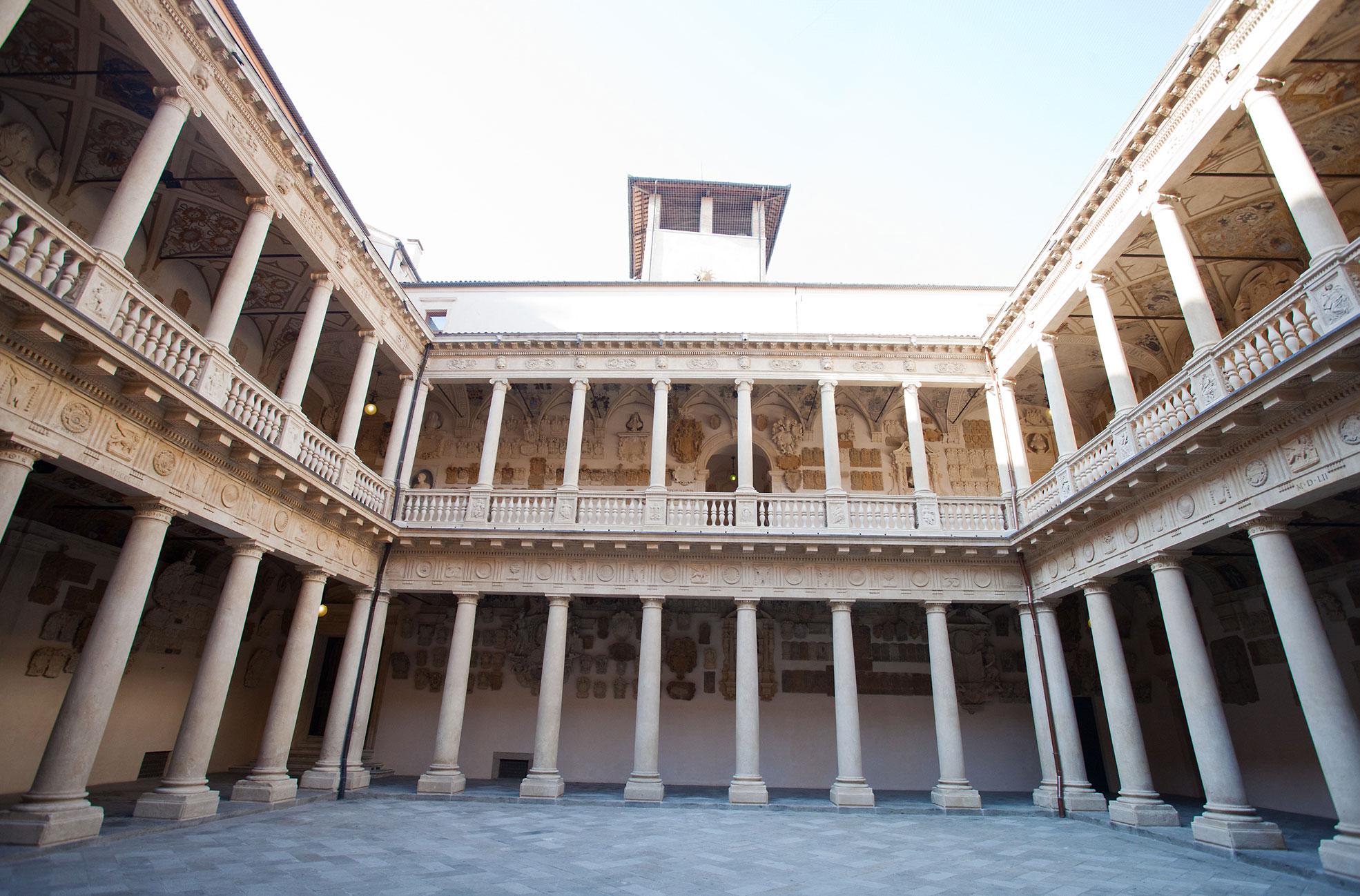
An elegant 16th‑century cloister designed by Andrea Moroni, with a double loggia and walls completely decorated with the coats of arms of rectors and councillors of the time.
The Great Hall (Aula Magna)
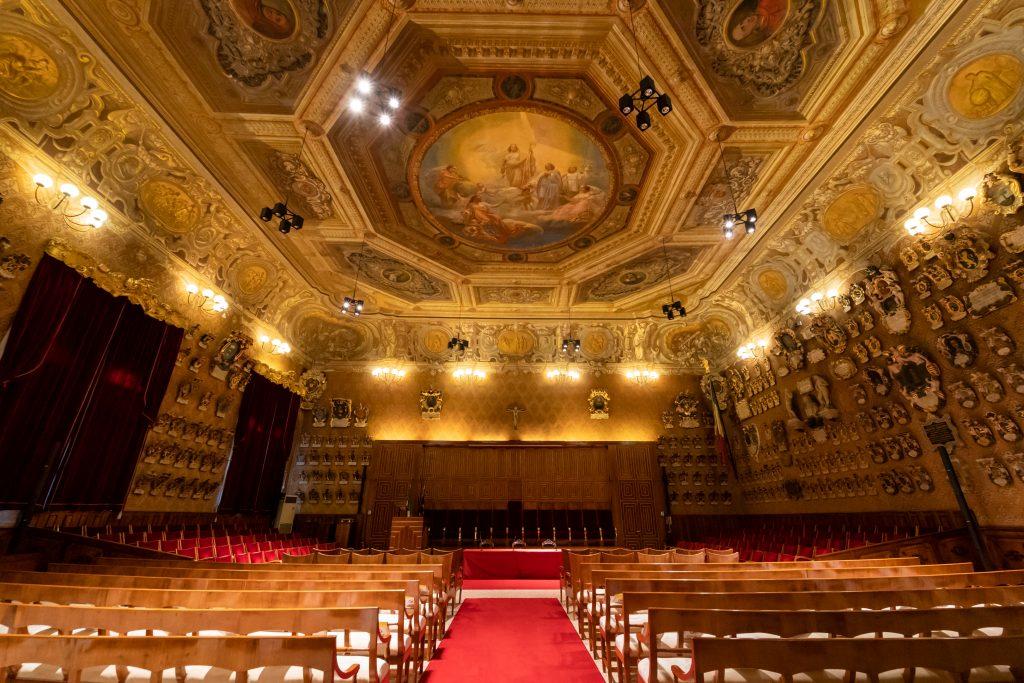
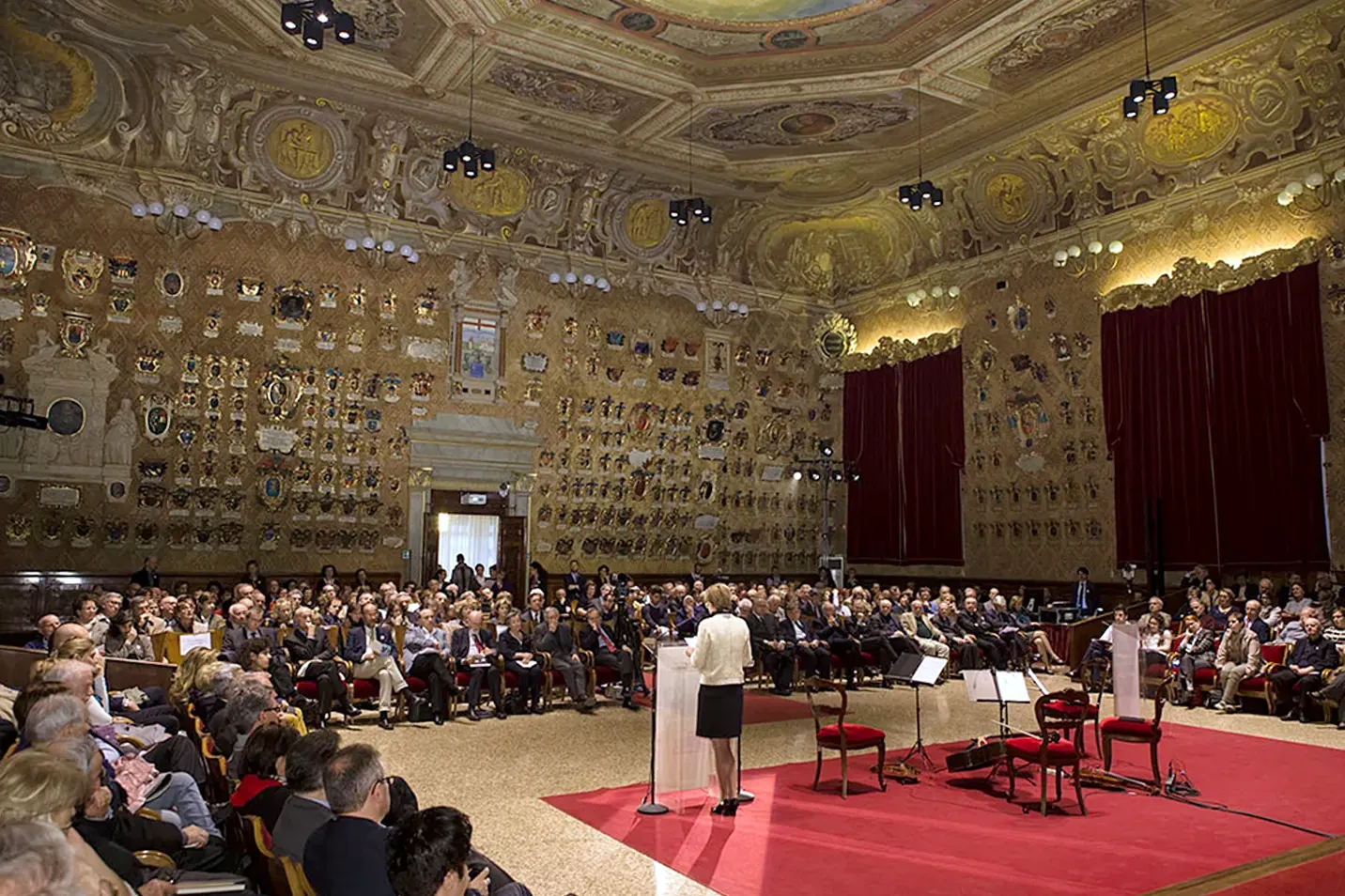
Solemn and full of atmosphere, with a ceiling frescoed by Carlini in 1854 and portraits of four symbolic figures of the University: Emo, Zabarella, Galileo Galilei, and Morgagni.
The Hall of the Forty (Sala dei Quaranta)
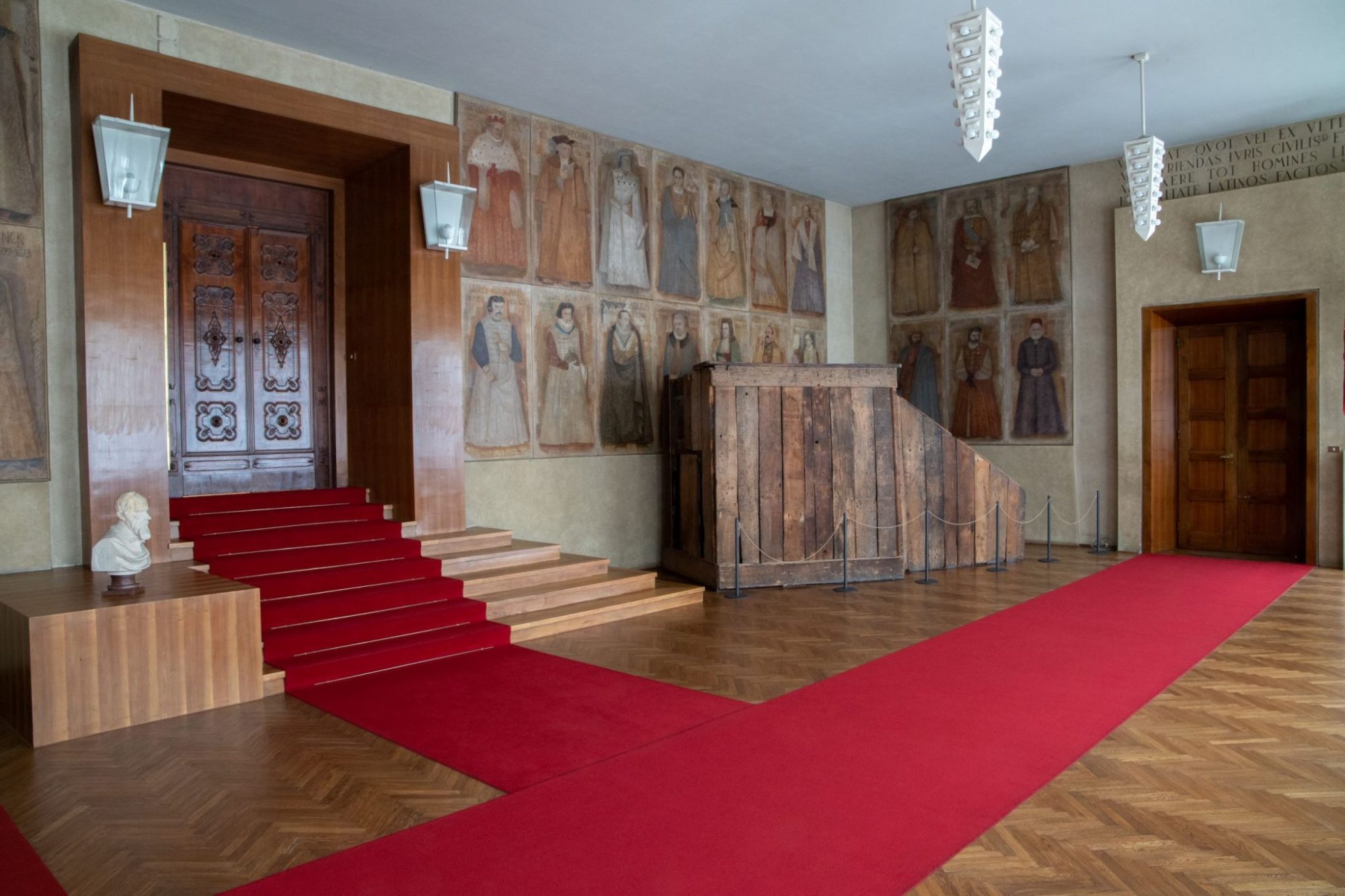
Here stands Galileo’s original chair, from which he taught mathematics and physics between 1592 and 1610. On the walls are portraits of forty illustrious foreign students.
The Anatomical Theatre
A real gem: the first anatomical theatre in the world, made of wood, with an elliptical structure and tiered seats. From here, medical students could watch the dissection of cadavers. An extraordinary testament to th scientific daring of Renaissance Padua.
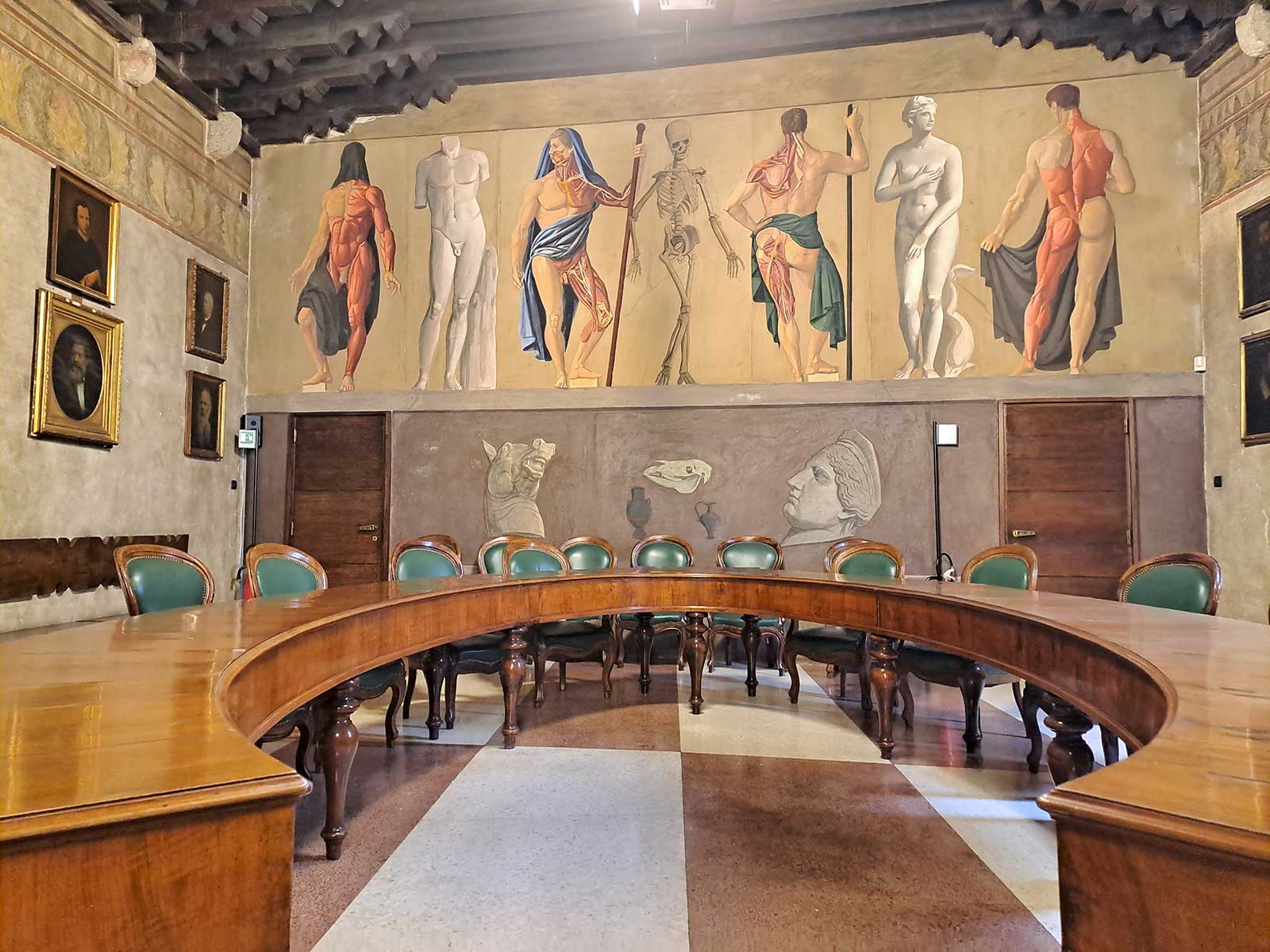
The Medicine Hall
With portraits of former professors, Futurist frescoes by Achille Funi and a display case containing the skulls of eminent scholars who donated their bodies to science.
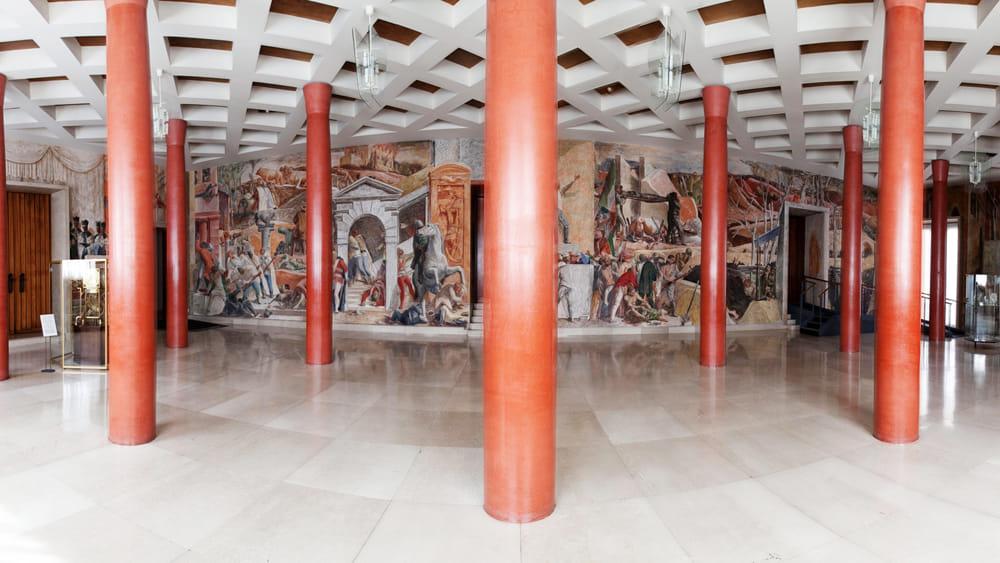
The “Basilica” Hall
The “Basilica” hall owes its name to its division into three naves, separated by two rows of columns painted in Pompeian red, the official colour of the University.
The New Courtyard and contemporary art
From the Old Courtyard you reach the New Courtyard, designed by architect Fagiuoli, where history and contemporary art engage in dialogue. Here you can find:
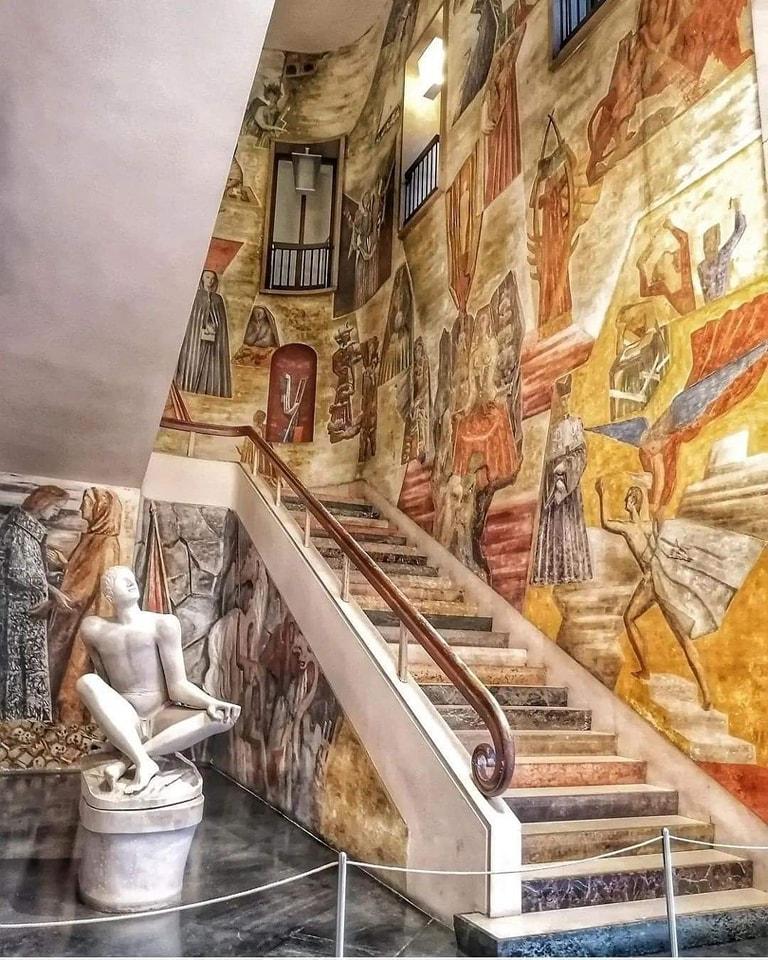
- the bas-relief by Attilio Selva celebrating student courage
- the famous Scala del Sapere (Stairway of Knowledge) designed by Gio Ponti
- the stele by Gio Pomodoro dedicated to Galileo
- an installation by Jannis Kounellis commemorating the Resistance
During the Second World War, Palazzo del Bo in fact hosted the Veneto CLN (National Liberation Committee), paying a very high price in the lives of students and professors.
One last ritual: the “Polifonico” at Mario’s
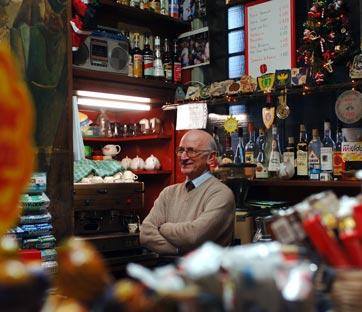
Before leaving, there is one final must-do stop:
in the New Courtyard you will find the historic Bar da Mario, where you can taste the legendary “Polifonico”, the aperitif of the paduan students’ tradition.
The recipe is secret and jealously guarded.
On the walls, photos of graduations, academic ceremonies and a very Paduan custom: the symbolic gift of a hen to the Rector at the opening of the academic year.
Palazzo del Bo: why should you visit it?
Palazzo del Bo is not just a historic building: it is the symbol of Padua as a city of knowledge, freedom and openness.
A place to visit unhurriedly, if you want to truly understand the city’s deepest soul.
Photo credits:
heritage.unipd.it
ilbolive.unipd.it
Massimo Pistore. University of Padova