
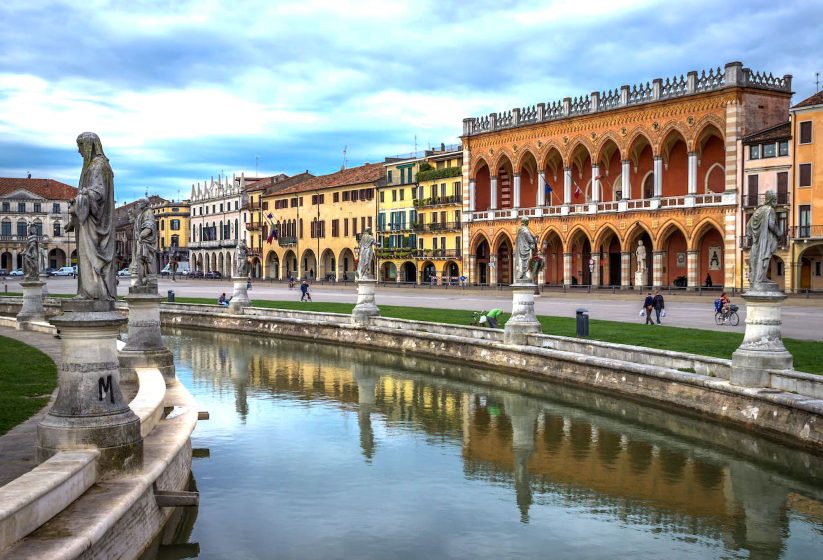
Padua is one of the Italian cities with the greatest number of porticoes: over 25 kilometers of covered walkways cross the historic center, connecting squares, churches, noble palaces, shops, and ancient city streets.

Walking under Padua’s porticoes means discovering an elegant and authentic city, where art, history, and daily life have coexisted for centuries. The porticoes shelter people from rain and sun, accompanying residents and tourists past hidden corners, canals, historic cafés, and ancient palaces.
From the Romanesque to the Liberty style, Padua’s porticoes tell the story of a rich and layered architectural and artistic heritage, made up of tall, wide arches as well as narrow, almost secret passages. They invite you to slow down your pace, observe carefully, and experience the city at a more authentic pace.
- Two itineraries under Padua’s porticoes
- Via Umberto I and Via Roma: the porticoes most loved by Paduans
- From Porta Pontecorvo to the historic center: Via San Francesco, “the Street of the Tall Porticoes”
- Padua’s porticoes: an urban museum to experience, and the “CaMMino sotto i portici” project
- A Padua to live… under the porticoes
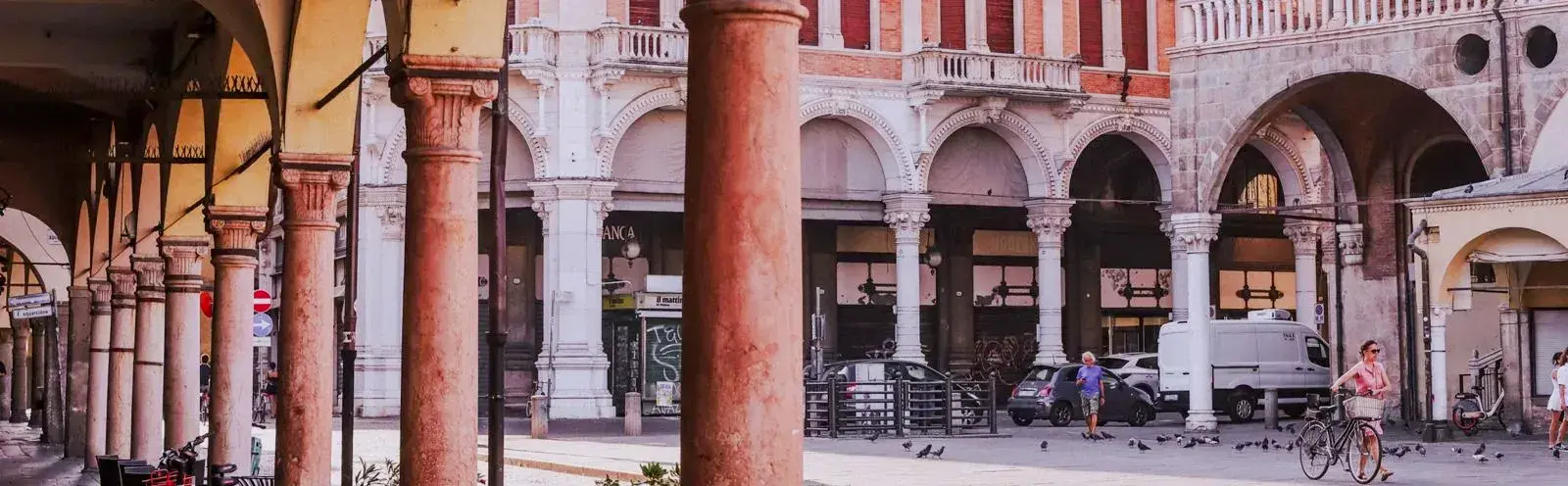
Two Itineraries Under Padua’s Porticoes
If you’re staying in the Prato della Valle area — perhaps in one of our apartments — you can easily reach two of the city’s finest porticoed itineraries. Perfect for exploring the historic center on foot, the first starts from Prato della Valle, the second from Porta Pontecorvo.
From Prato della Valle to Basilica of Saint Anthony and Palazzo del Bo’
Prato della Valle is one of the best places to begin exploring Padua’s porticoes.
From here you can easily reach the Basilica of Saint Anthony, passing through the charming porticoes of Via Belludi and Via Cesarotti. Alternatively, you can walk along Via Umberto I and then Via Roma, arriving in the heart of the city center, all the way to Palazzo del Bo’.
Via Luca Belludi and the Basilica of the Saint

Via Belludi is an elegant street lined with decorated porticoes, baroque palaces, historic shops, and small artisan boutiques.
Under these porticoes, students, pilgrims, residents, and tourists mingle every day, creating a lively and authentic atmosphere.
On this street you can also buy the famous “Dolce del Santo,” a traditional Paduan cake filled with apricot jam, almonds, and candied fruit, a symbol of abundance and good fortune.
Via Luca Belludi will lead you right in front of the imposing Basilica of Saint Anthony, with its beautiful square crowded with worshippers and tourists, and its characteristic stalls selling votive items.
Via Umberto I and Via Roma: The Porticoes Most Loved by Paduans
Also starting from Prato della Valle, you can easily reach Via Umberto I and then Via Roma, two of the city’s most elegant and busiest porticoed streets.
Via Umberto I offers airy porticoes, noble palaces, and historic shops.
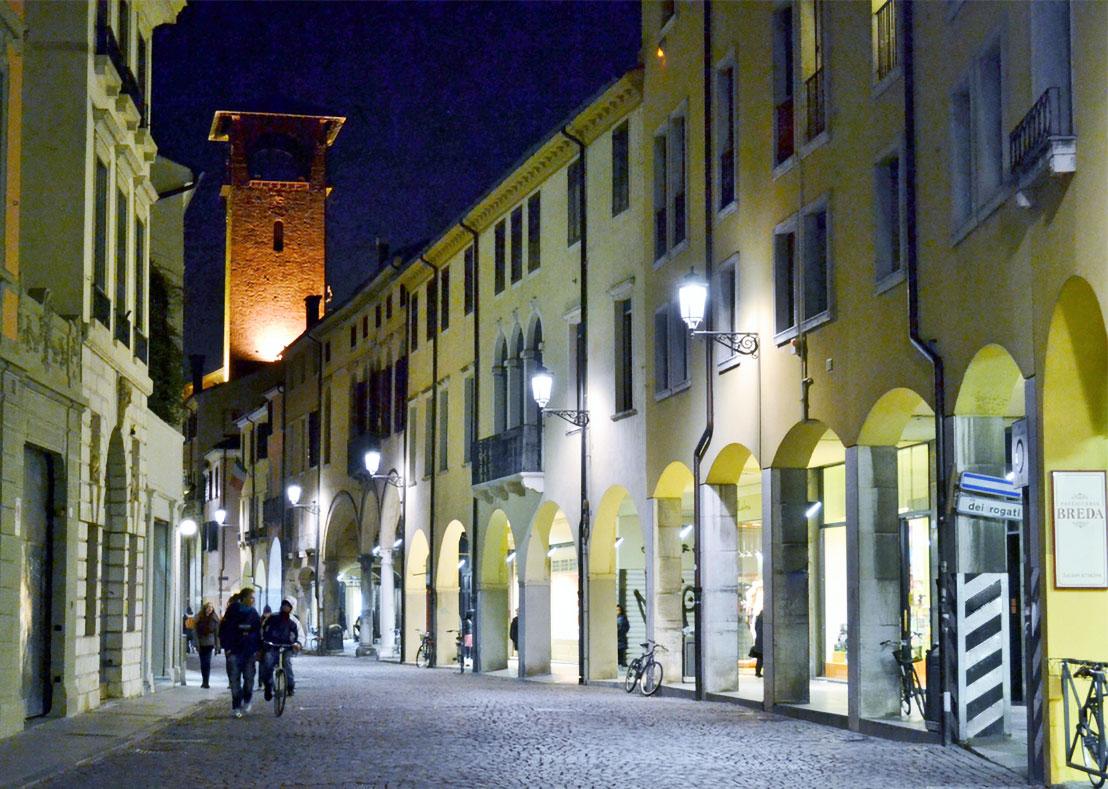
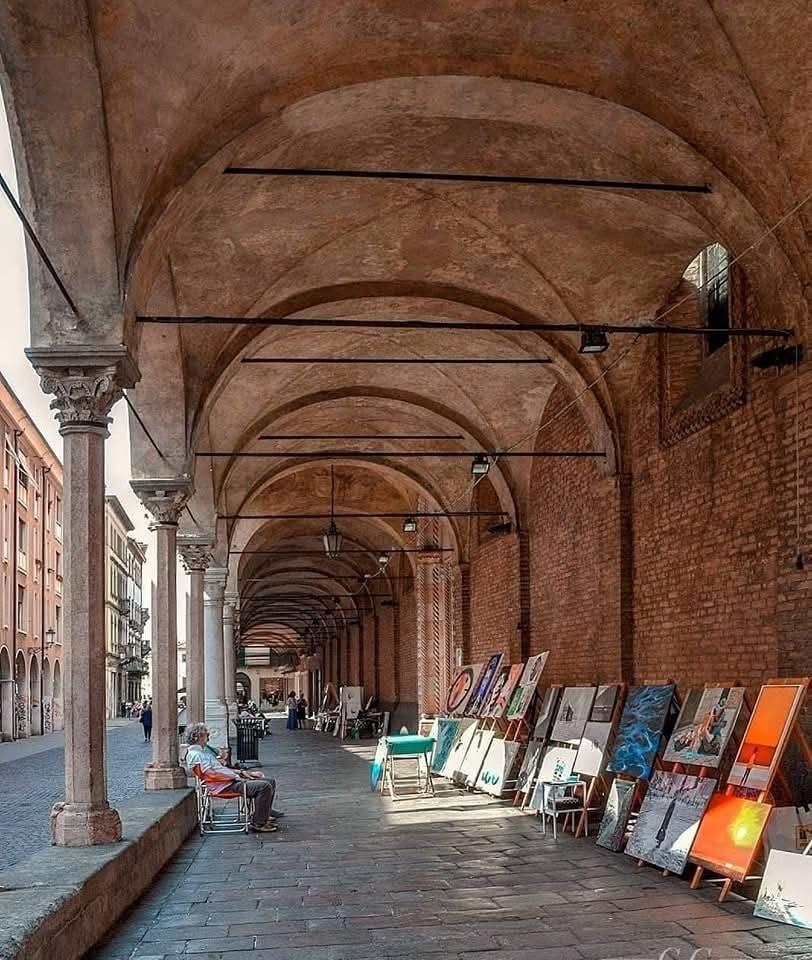

Via Roma is wide and lively; its porticoes house ancient palaces, shops, bars, and restaurants.
Red marble and Costozza stone pillars stand in front of the beautiful fourteenth-century church of Santa Maria dei Servi. As the first evening lights begin to glow, casting golden reflections on the columns and the pavement, Via Roma becomes an incredibly charming place, perfect for stopping to chat, drink an aperitivo, and watch the city flow past the café tables.
From Porta Pontecorvo to the Historic Center: Via San Francesco, “the Street of the Tall Porticoes”
The second itinerary starts at Porta Pontecorvo and leads along Via San Francesco, known as the historic “Via dei Porteghi Alti” (Street of the Tall Porticoes).. Here you’ll find one of the most fascinating spots in Padua: a long fifteenth-century portico made up of twenty-six arches, with medieval stone and brick columns. You may come across traces of ancient frescoes attributed to the school of Squarcione, a Paduan painter and master of Mantegna.
Today, this historic stretch continues to tell the story of the bond between devotion, daily life, and urban memory: frescoes and religious decorations bear witness to the ancient custom of adorning porticoes with sacred images and devotional symbols. Via San Francesco is home to historic palaces such as Palazzo Zabarella, Palazzo Romanin Jacur — which hosted Dante in 1306, as the inscription records — and Palazzo della Provincia, in front of which stands the tomb of Antenor, founder of the city of Padua. A few more steps and you’ll reach Palazzo del Bo’, seat of the ancient University of Padua.
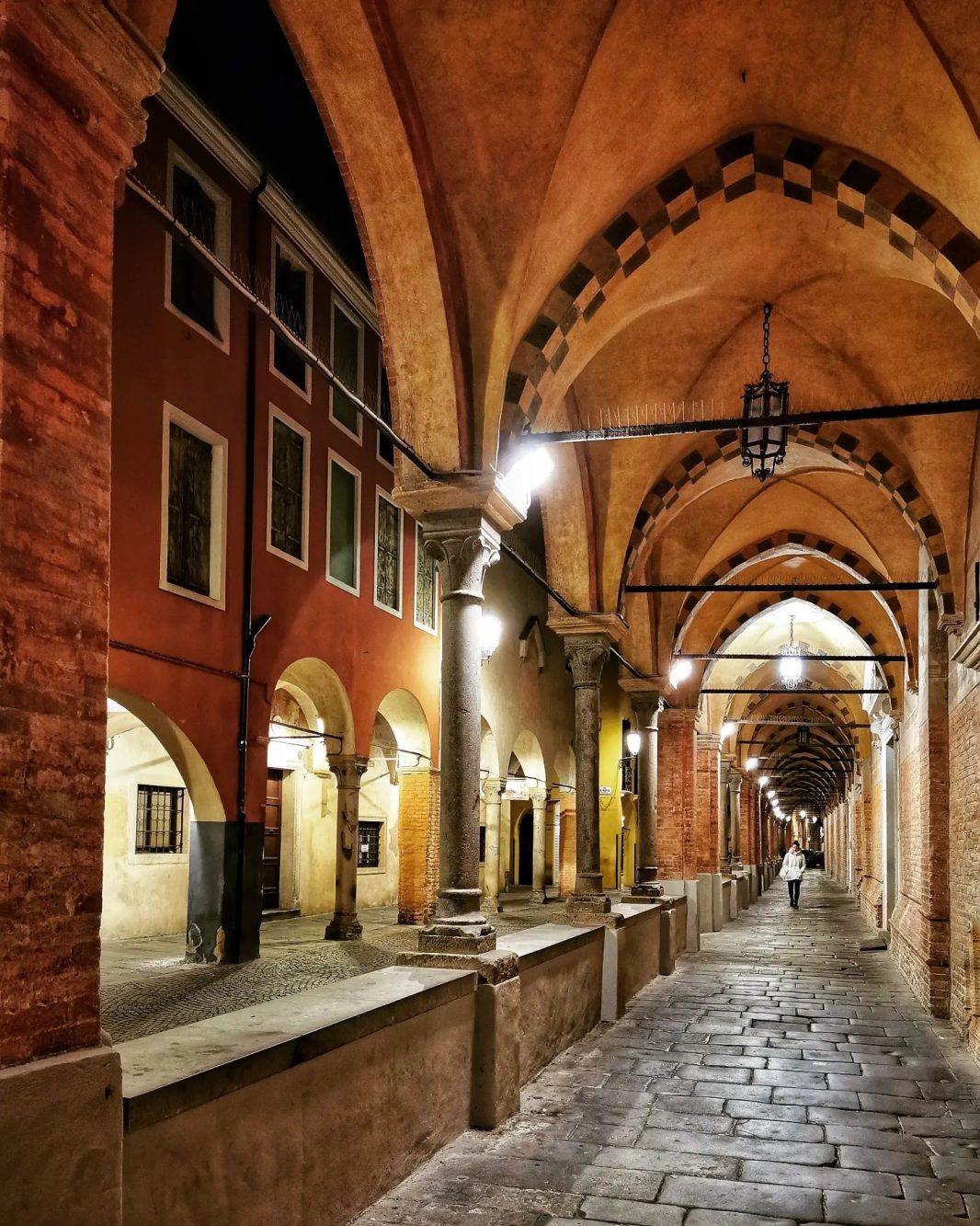
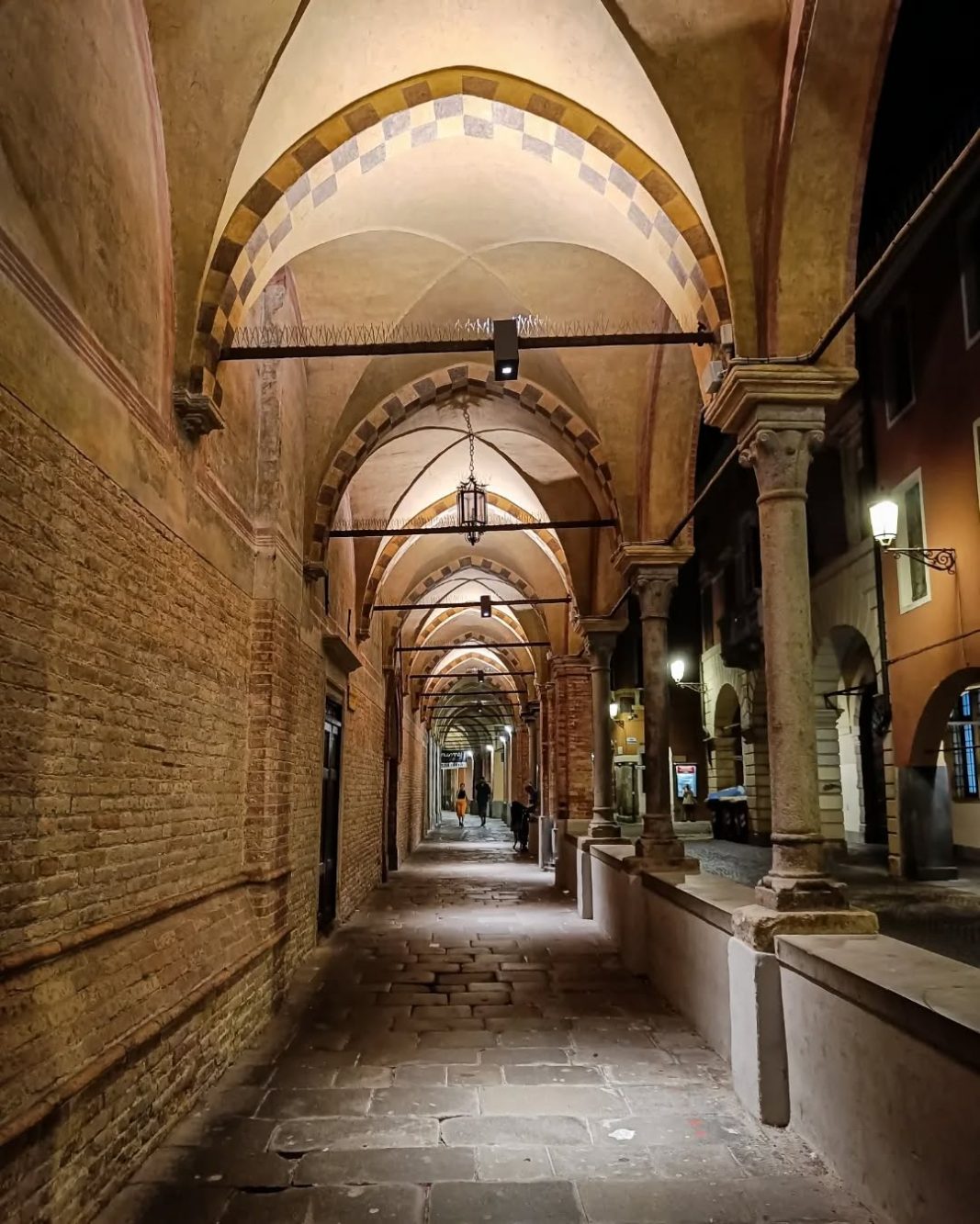
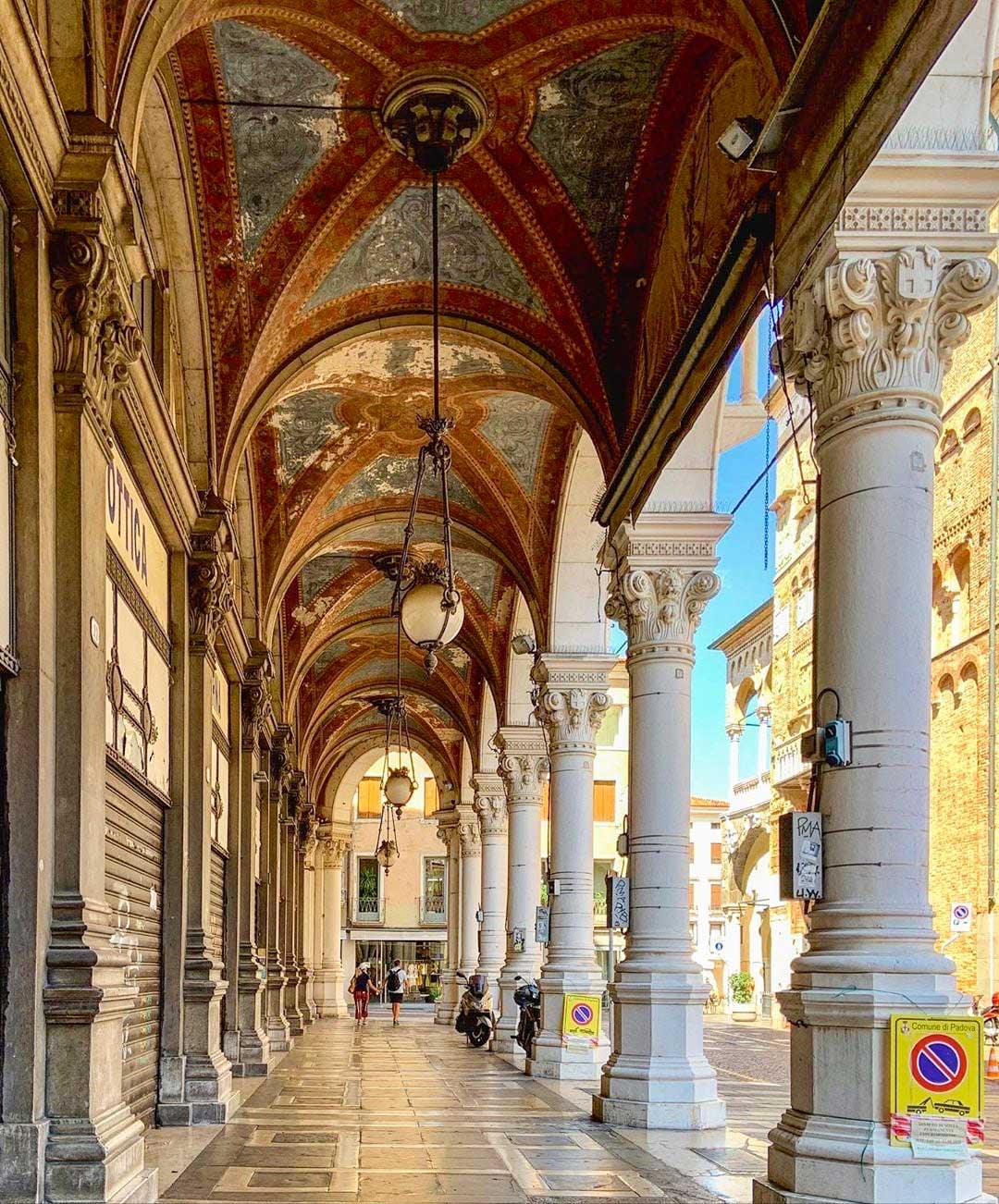

From here you can continue your walk under the porticoes of the squares or under the ancient porticoes of the ghetto, with its cobbled lanes, small independent bookshops like those on nearby Via Barbarigo, and old craftshops.
You’ll soon realize that all the streets of the historic center are protected by porticoes rich in art and history.
Let’s just mention the porticoes of:
- Via Vescovado, home to a striking, almost continuous double row of porticoes, where Gattamelata and Petrarch once stayed;
- Via Euganea, whose porticoes were built in medieval times to expand living spaces and house shops;
- Via Dante, lined with beautiful Renaissance and eighteenth-century palaces, now home to art galleries and artists’ studios.
Padua’s Porticoes: A Living Urban Museum and the “CaMMino sotto i portici” (Walking under the porticoes) Project
The city still holds countless porticoes that make it a true open-air urban museum. Among others, we should mention the porticoes of:
- Corso Vittorio Emanuele II, which leads from Prato della Valle to Piazzale Santa Croce and the Sanctuary of San Leopoldo Mandić;
- Via Altinate, with its wide, elegant porticoes housing important historic palaces such as Palazzo Arslan and Palazzo Mario;
- Via Belzoni, one of the liveliest university streets in the city, full of venues frequented by students, small bars, and historic buildings. Under these porticoes is also the birthplace of the explorer Giovanni Battista Belzoni;
- Via Tadi, one of the most fascinating streets in the historic center, with medieval buildings, decorated 4-light windows, Latin inscriptions, and ancient noble palaces;
- Via Savonarola, perfect for an evening stroll under the porticoes among colorful houses, wine bars, and venues for aperitivos and dinner.

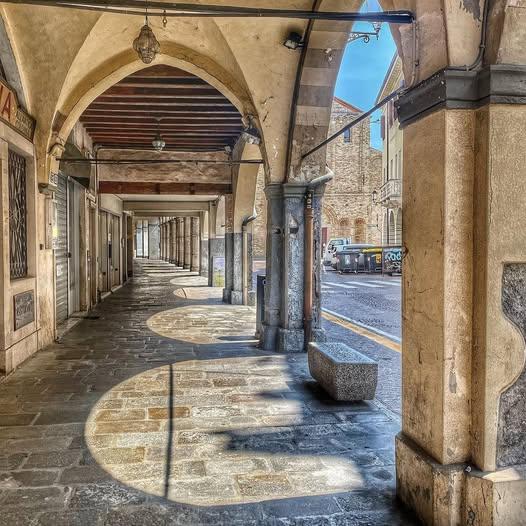
Padua’s porticoes are therefore not just an architectural feature, but a true urban experience and a reflection of local tradition. For residents, they are a space for social life, ideal for stopping for a coffee, taking shelter from the summer heat or the rain, or browsing a book in a small independent bookshop.

In 2025, Padua launched the “CaMMino sotto i portici” (Walking under the porticoes) Project, created to better appreciate this extraordinary urban heritage through cultural, artistic, commercial, and gastronomic itineraries.
Its aim is to turn the porticoes into a large, accessible, living urban museum, capable of bringing together tourism, history, and local commerce.
A Padua to Live… Under the Porticoes
Whether for a walk, an aperitivo, or a cultural itinerary, Padua’s porticoes are one of the most authentic ways to get to know and experience the city. They accompany visitors on a journey made of details, atmospheres, and hidden corners that often escape a quick glance — but that tell the truest soul of our city.
Photo credits:
padovasottoiportici.it
minube.it
tipicnic.it