
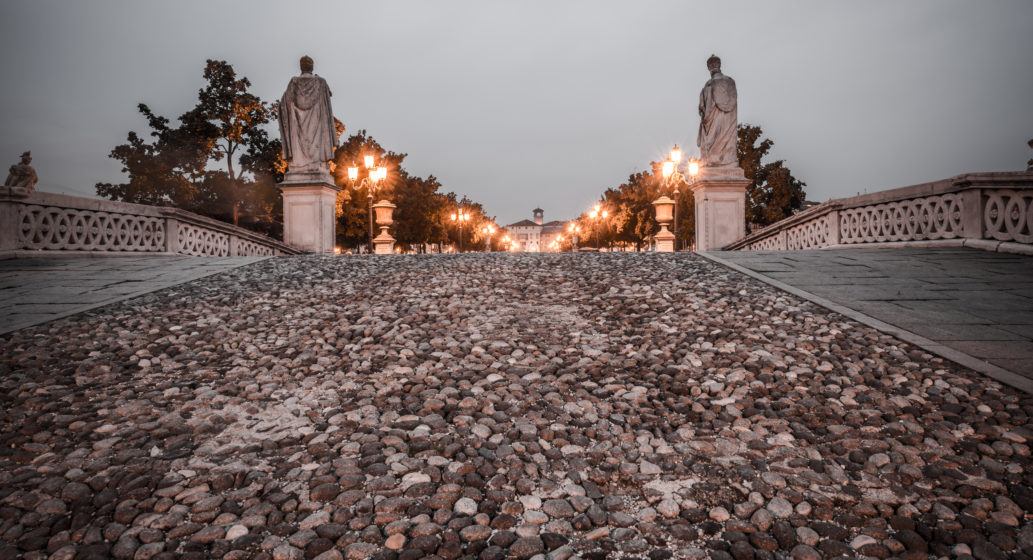
Prato della Valle, the biggest square in all of Europe after Moscow’s Red Square, with the Caffè Pedrocchi is one of the symbols of Paduan identity. With its 90,000 m2 surface, it can legitimately boast the title of one of the most beautiful pedestrian zones in the world.
In the centre of the famous “lawn with no grass” is the island of Memmia.
A vast egg-shaped garden adorned with 4 bridges, 8 obelisks, 16 ornamental vases and a canal whose inner and outer border has pedestals upon which rise sculptures installed between 1775 and 1883 by various artists. But who do they represent?

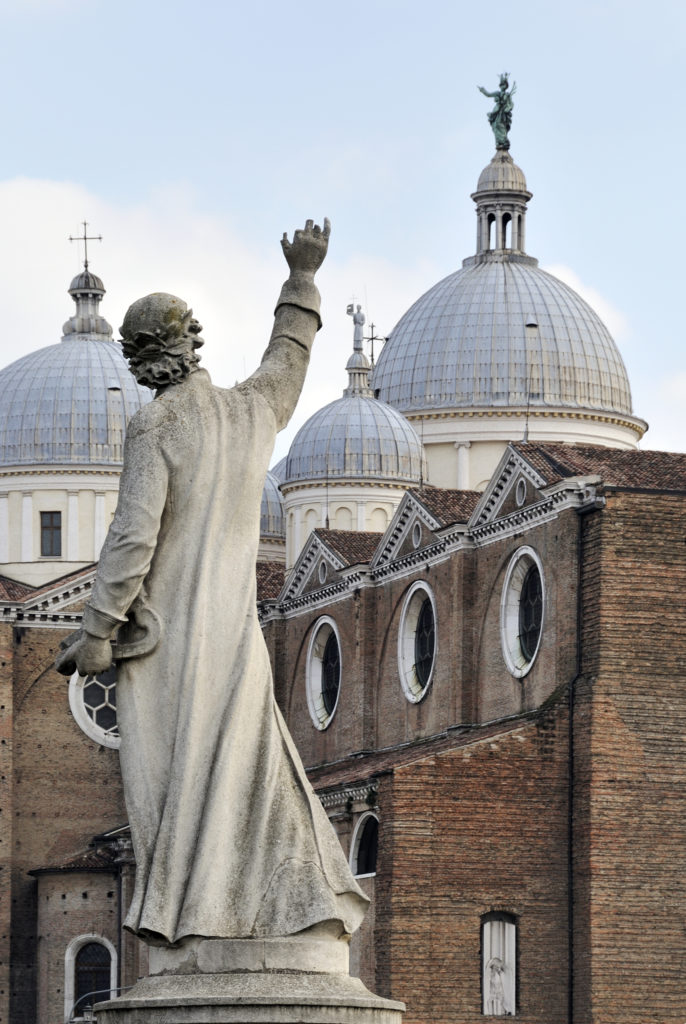
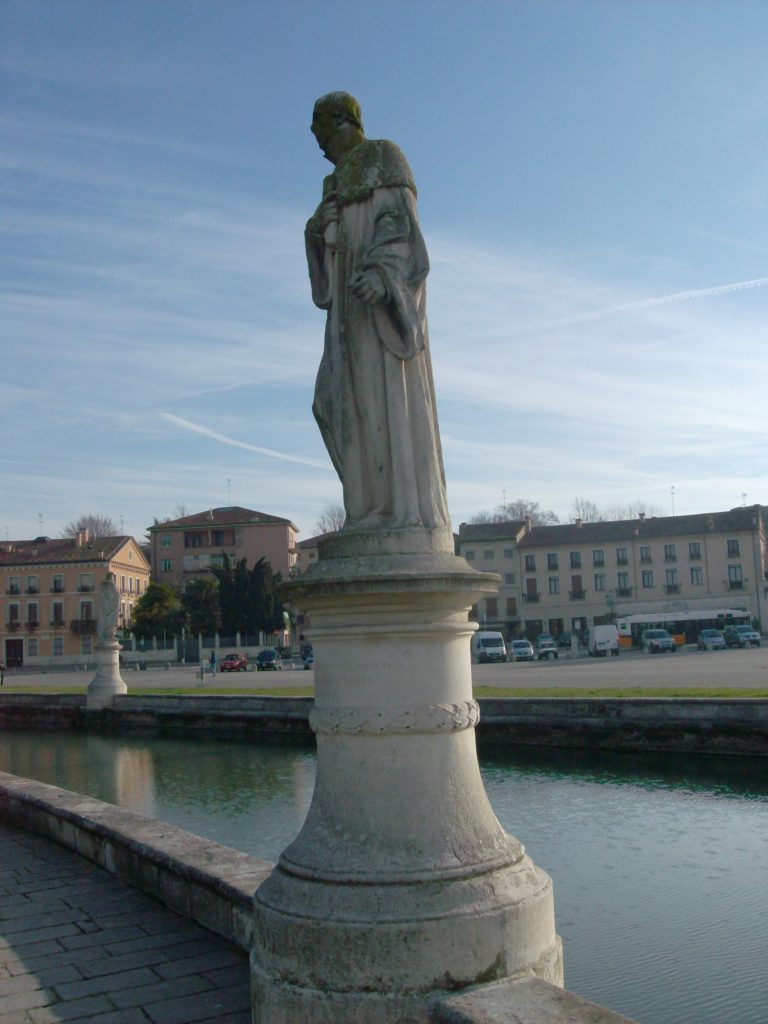
Who do the statues in Prato della Valle represent?
The statues that adorn the square, all made of Costozza stone, portray the most famous people of the city, both born and bred and adopted Paduans. They also represent professors and students of the University that gave importance to the city and its academic reputation.
The spots by the opening of each bridge were reserved for political figures, Doges and Popes.
The first statue was erected in 1785 by the same Andrea Memmo that commissioned the works to start building Prato della Valle, in honour of Antenore, the mythical founder of the city. The last statue was completed in 1838 and represents the medic Francesco Luigi Fanzago.
In the past one could also admire a statue sculpted by Antonio Canova: the mathematician Giovanni Poleni, transferred in 1963 to the cloister of the Civic Museums and substituted with that of the Vicenzian sculptor Luigi Strazzabosco, still visible today.
How many are the statues in Prato della Valle and how can you recognise them?
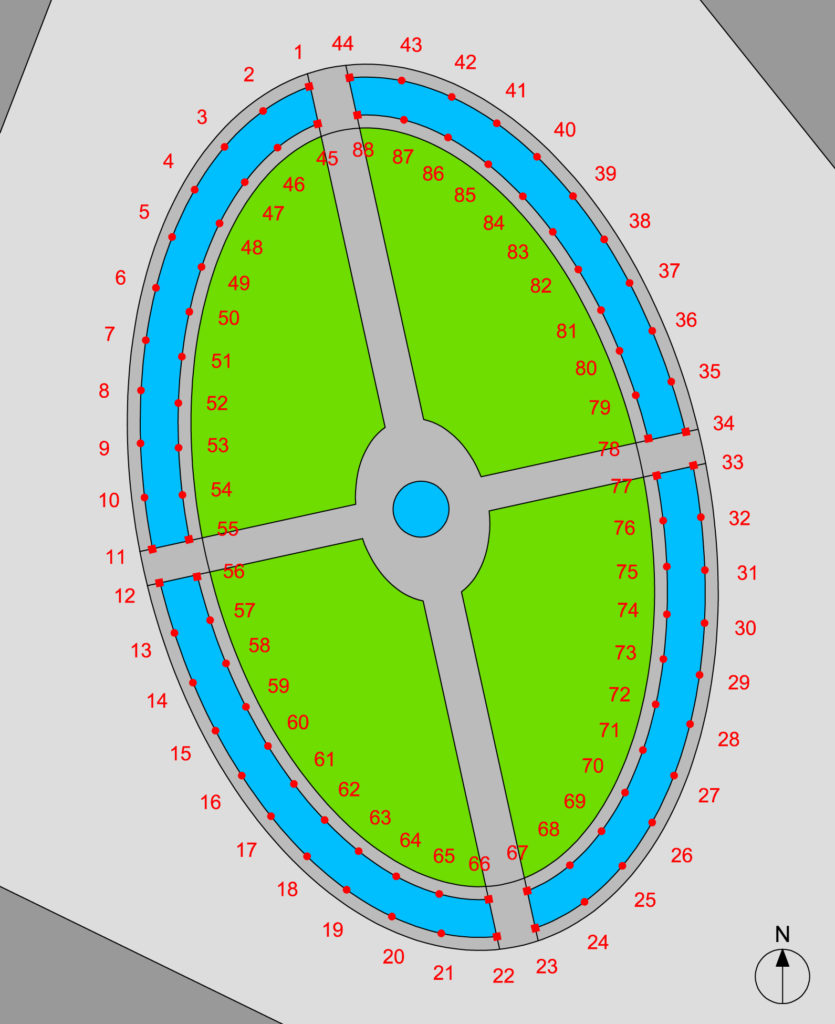
There are 78 statues in Prato della Valle: 38 round the inner ring of the island of Memmia and 40 along the outer one.
But how to recognise who’s who? To help you in your search, we would like to give a list and a map: the numbering will allow you to identify the identity of each statue in an easy and fun way.
We’ll give you an idea: if you’re visiting our city with your children, with friends or as a couple, why not organise a treasure hunt with them, or a statue hunt, even?
It will surely be an original and enthusiastic way to experience Padua and getting to know its most famous figures.
Distance from ApartmentsPadua: 800m (see map)
Writers and artists in the Paduan world
Pietro D’Abano (6); Giovanni Francesco Mussato (7); Bernardo Nani (13); Domenico Lazzaroni (18); Marco Mantova Benavides (20); Bernardino Trevisan (24); Andrea da Recanati (26); Albertino Mussato (28); Melchiorre Cesarotti (32); Sicco Polentone (39); Andrea Navagero (43); Zambon de Dauli (46)Sperone Speroni (47); Fortunio Liceti (50); Giovanni Poleni (52); Giovanni Dondi dell’Orologio (54); Antonio Schinella de’ Conti (57); Matteo de Ragnina (61); Stefano Gallini (63); Filippo Salviati (64); Luigi Fanzago (69); Giulio Pontedera (71); Jacopo Menocchio (74); Pietro Danieletti (79); Andrea Briosco (85); Michele Savonarola (87).
Chief magistrates and politicians from Padua
Pagano della Torre (8); Nicolò Tron (72); Marino Cavalli (84); Maffeo Memmo (42); Jacopino de Rossi (58); Guglielmo Malaspina degli Obizzi (53); Francesco Pisani (70); Andrea Memmo (44); Altenerio degli Azzoni (38); Albertino Papafava (86).
Writers and artists famous nationwide
Torquato Tasso (5); Andrea Mantegna (21); Ludovico Ariosto (27); Giuseppe Tartini (29);
Francesco Petrarca (35); Galileo Galilei (36); Antonio Canova (68); Francesco Guicciardini (73).
Latin writers and philosophers
P. Clodio Trasea Peto (4); Lucio Arunzio Stella (9); Tito Livio (48)
Mythical characters and rulers from Padua
Antenore (2); Opsicella (10).
Alberto Azzo II d’Este (3); Antonio da Rio (25); Antonio Zacco (40); Ludovico Buzzacarini (51); Antonio Savonarola (83).
Popes
Paolo II (22); Eugenio IV (23) Alessandro VIII (66); Clemente XIII (67).
Venetian politicians and rulers
Antonio Diedo (1); Vettor Pisani (14); Antonio Michiel (16); Antonio Barbarico (17); Giovanni Maria Memmo (30); Michele Morosini (31), Alessandro Orsato (37) ; Cesare Piovene (41); Gerolamo Servognan (49); Raniero Vasco (80); Francesco Morosini (81).
Other figures
Ludovico Sanbonifacio (condottiero veronese, 15); Taddeo Pepoli (bolognese, 19); Gustavo Adamo Baner e Gustavo Adolfo (svedesi, 59 e 60); Giobbe Ludolf (tedesco, 62); Umberto Pallavicino (65); Giovanni Sobiesky e Stefano Bathory (polacchi, 75 e 76); Gerolamo Liorsi (veronese, 82).
Photo via: Shutterstock.com
Immagine della pianta: di Fabiobordi – Opera propria, CC BY-SA 3.0, https://commons.wikimedia.org/w/index.php?curid=3335580