
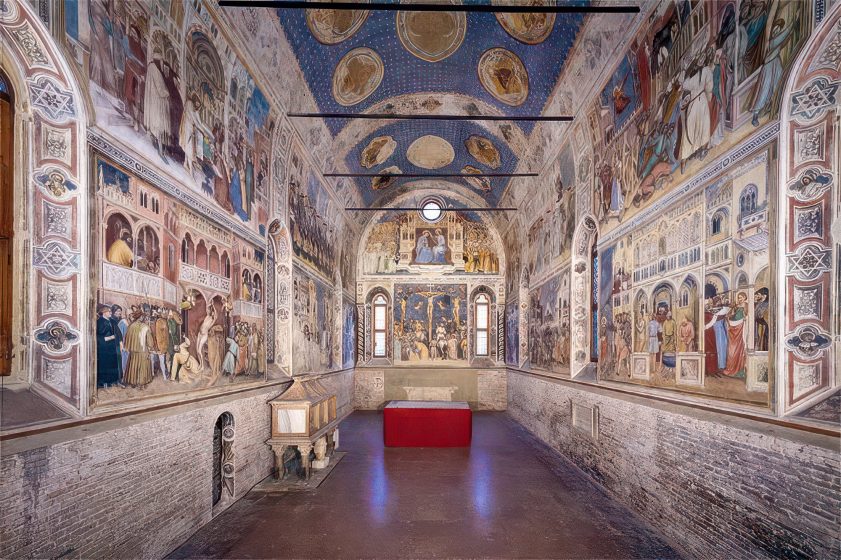
The Oratory of San Giorgio and the Oratory of San Michele Arcangelo have been included by UNESCO among the World Heritage Sites within the 14th-century fresco cycles of Padua. These are two gems you absolutely cannot miss.

- Oratory of San Giorgio: Altichiero Da Zevio’s Frescoes
- A New Language
- Oratory of San Michele: Jacopo Da Verona’s Frescoes
- The Stories of the Virgin’s Life
- Beyond Giotto
- Attention to Daily Life
Oratory of San Giorgio: frescoes by Altichiero da Zevio
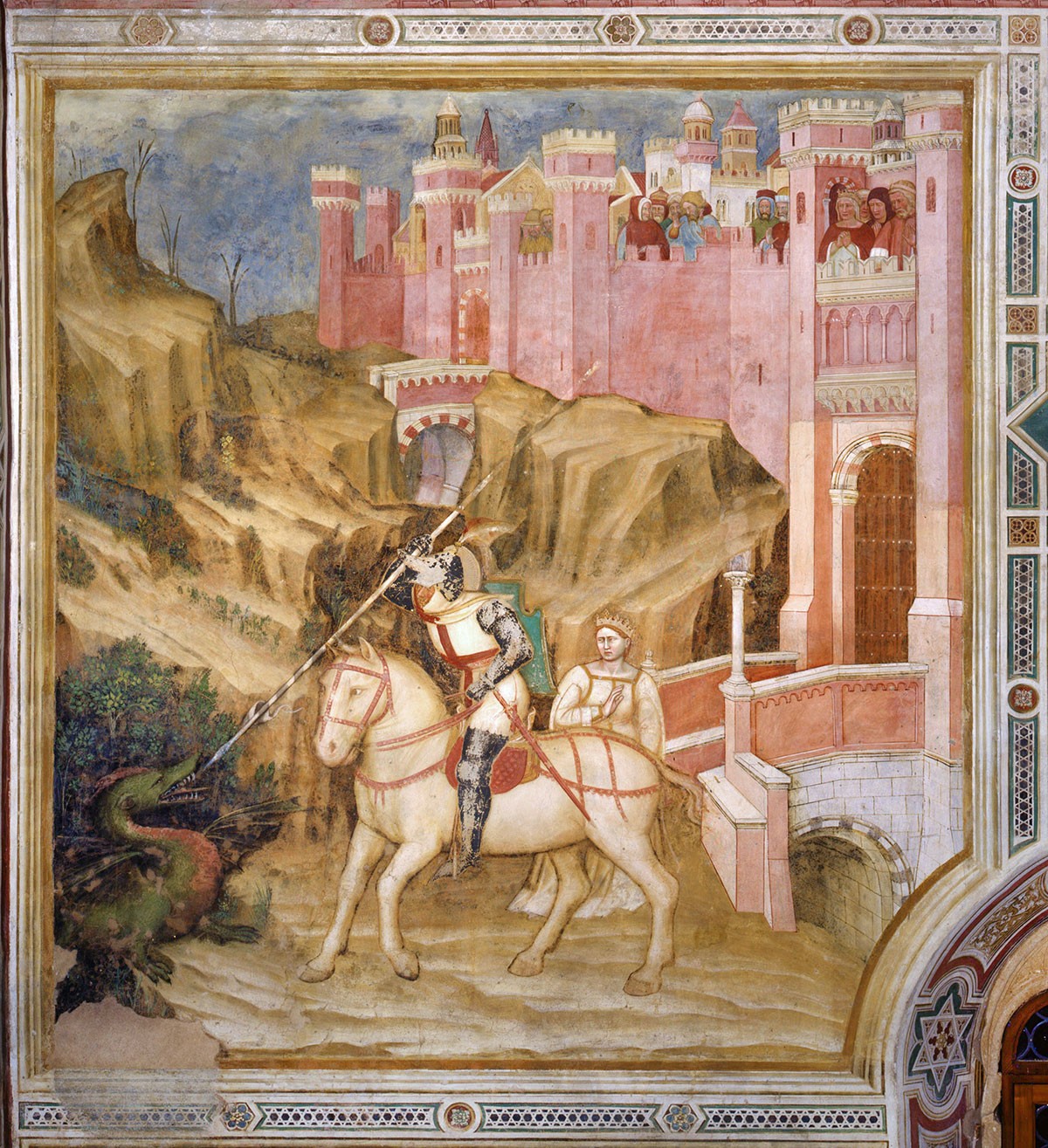
Overlooking the square of the Basilica of Saint Anthony, the Oratory of San Giorgio was built in 1377 by Raimondino dei Lupi di Soragna as the family burial chapel. The oratory was painted by Altichiero da Zevio, in collaboration with Jacopo da Verona, who created the frescoes in the cycle of the Oratory of San Michele.
The iconographic program of the fresco cycle focuses on the life stories of Christ and the Lupi family’s patron saints (St. George, St. Catherine, and St. Sophia). These stories were taken from the “Golden Legend” by Jacopo da Varagine, possibly outlined by Lombardo della Seta, secretary to Francesco Petrarca.
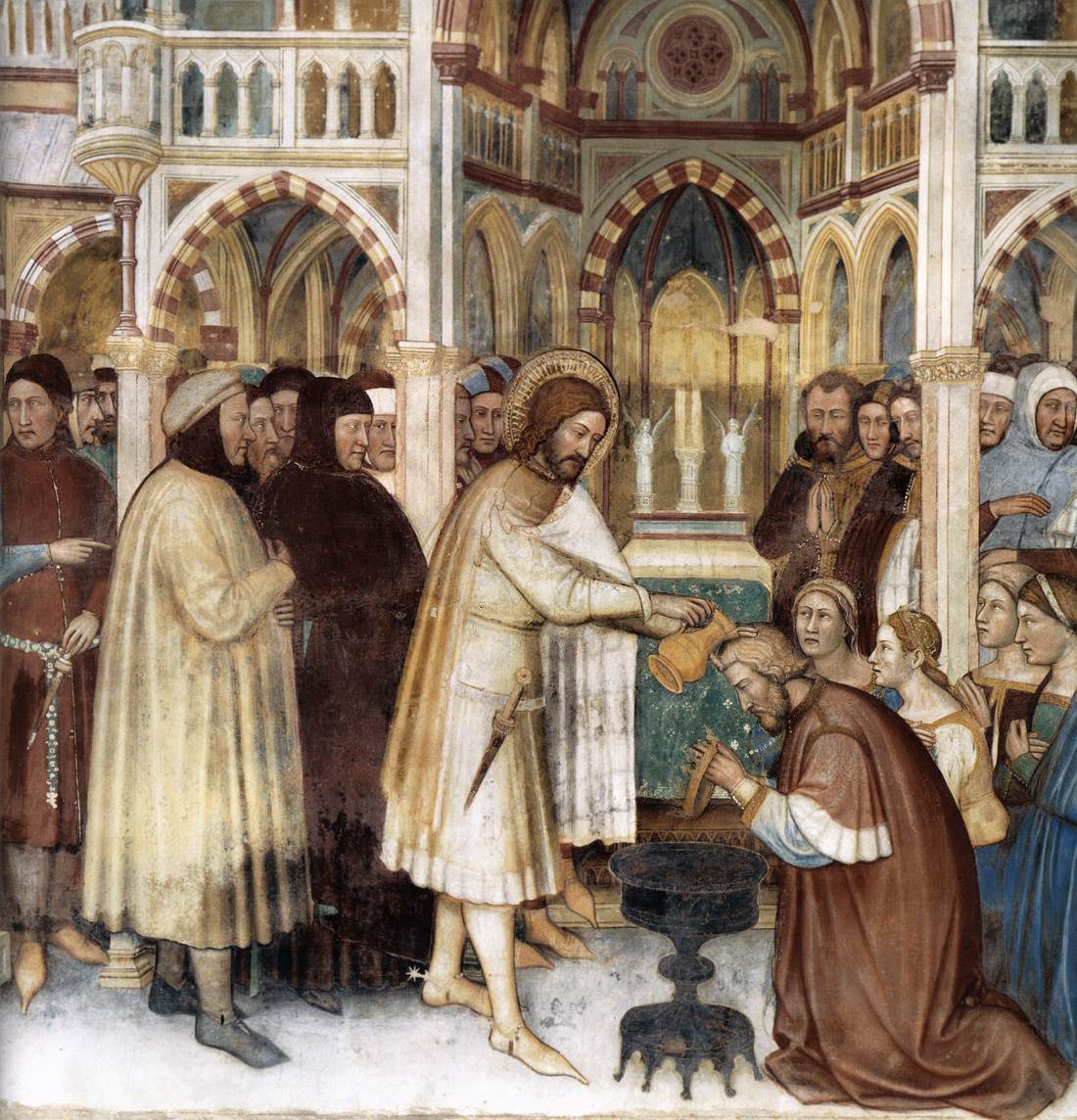
By the way: here, for the first time, a portrait of Petrarca appears. The poet appears among the crowd witnessing the baptism of King Sevio (“Saint George baptizes Sevio, King of Cyrene”).
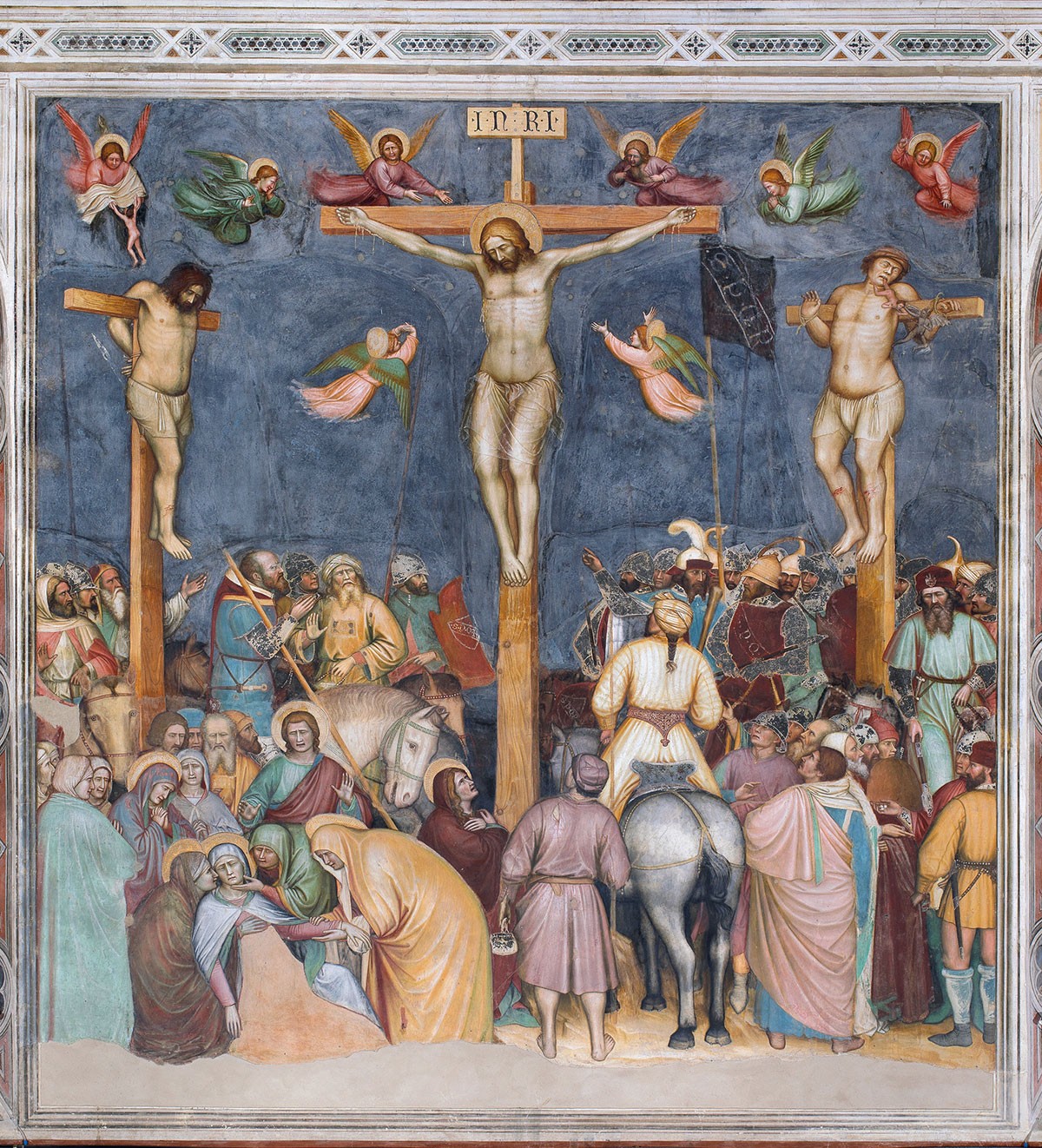
The front walls feature scenes from the Gospel, while the side walls are dedicated to St. George, St. Catherine, and St. Sophia. The back wall is dominated by a large Crucifixion, surmounted by the Coronation of Mary surrounded by angelic choirs.
A New Language
The patron Raimondino Lupi di Soragna wanted the same architectural layout as the Scrovegni Chapel. As a result, it features a smooth-walled hall covered by a barrel vault and the organization of scenes on overlapping registers. Additionally, there is a starry vault with figures inside clipei (round spaces containing portraits).
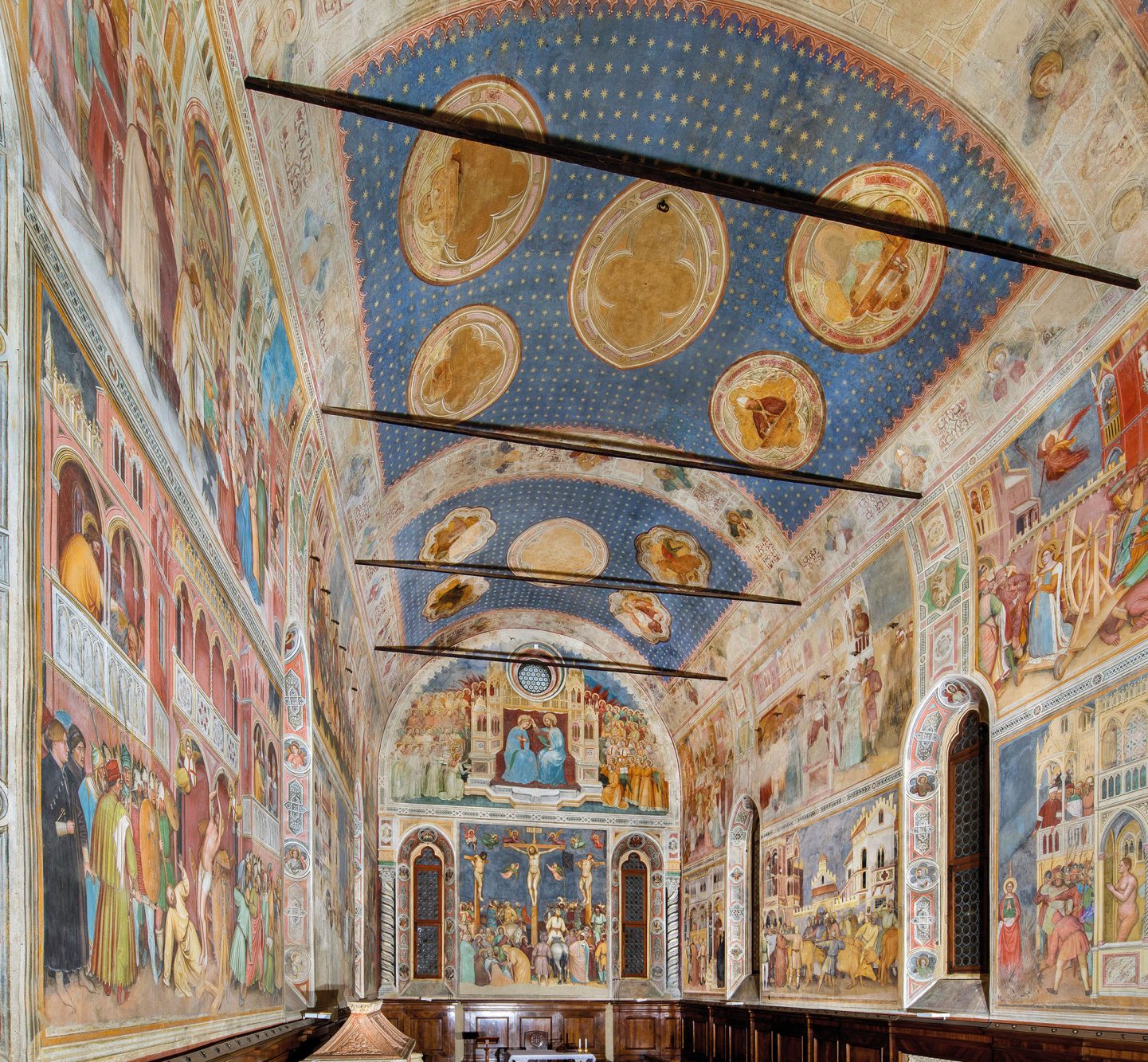
However, Altichiero introduces new perspective solutions and a new luminosity of color, making this cycle a masterpiece anticipating 15th-century art. The faces and characters are imbued with a strong realism. Jacopo combines Giotto’s expressive power with the courtly atmosphere of International Gothic, marked by prominent attention to lines and the use of softly shaded colors.
Oratory of San Michele: The Frescoes by Jacopo Da Verona
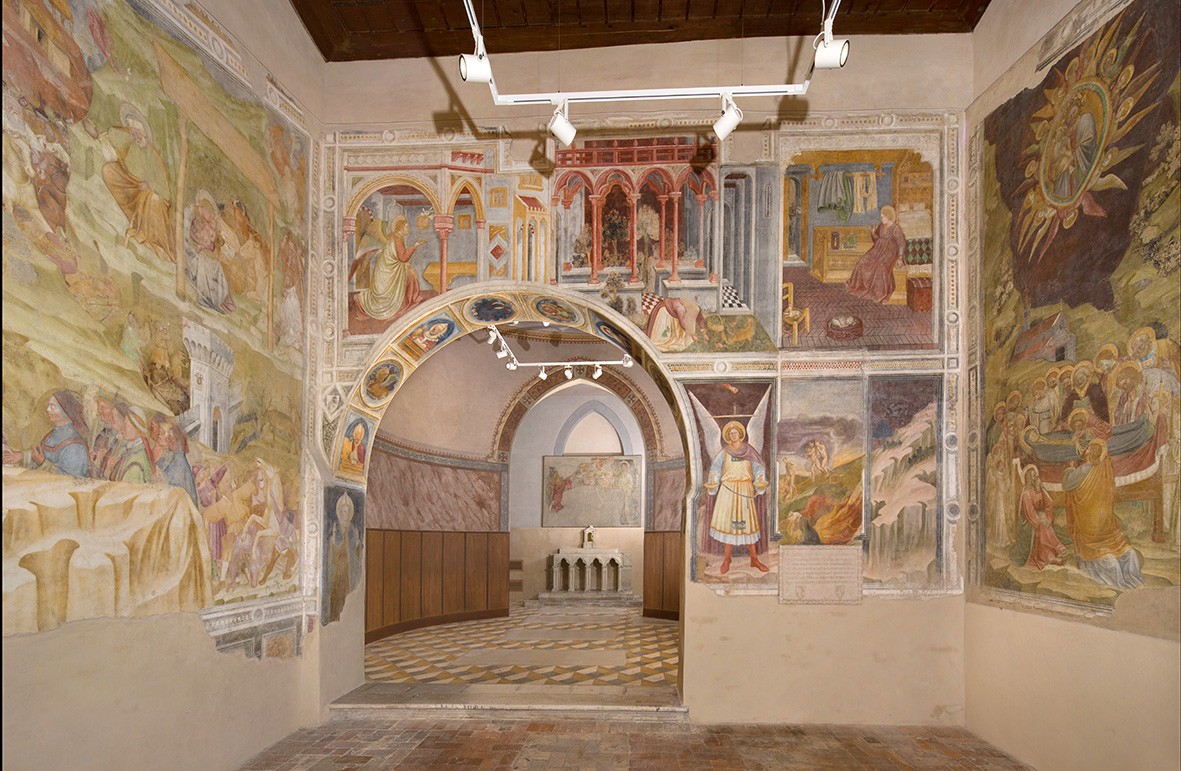
And here we are at yet another gem of Padova Urbs Picta. Located near the Specola Tower, the small Oratory of San Michele stands on the ruins of a sacred building.This building, dedicated to the holy Archangels, probably dates back to the Longobard period. In 1390, a fire caused by clashes between the Carraresi and Visconti severely damaged the ancient church. The prominent Paduan de Bovi family seized the opportunity to commission the construction of a chapel inside, dedicated to the Blessed Virgin Mary, assigning Jacopo da Verona the task of frescoing it.
The Stories of the Life of the Virgin
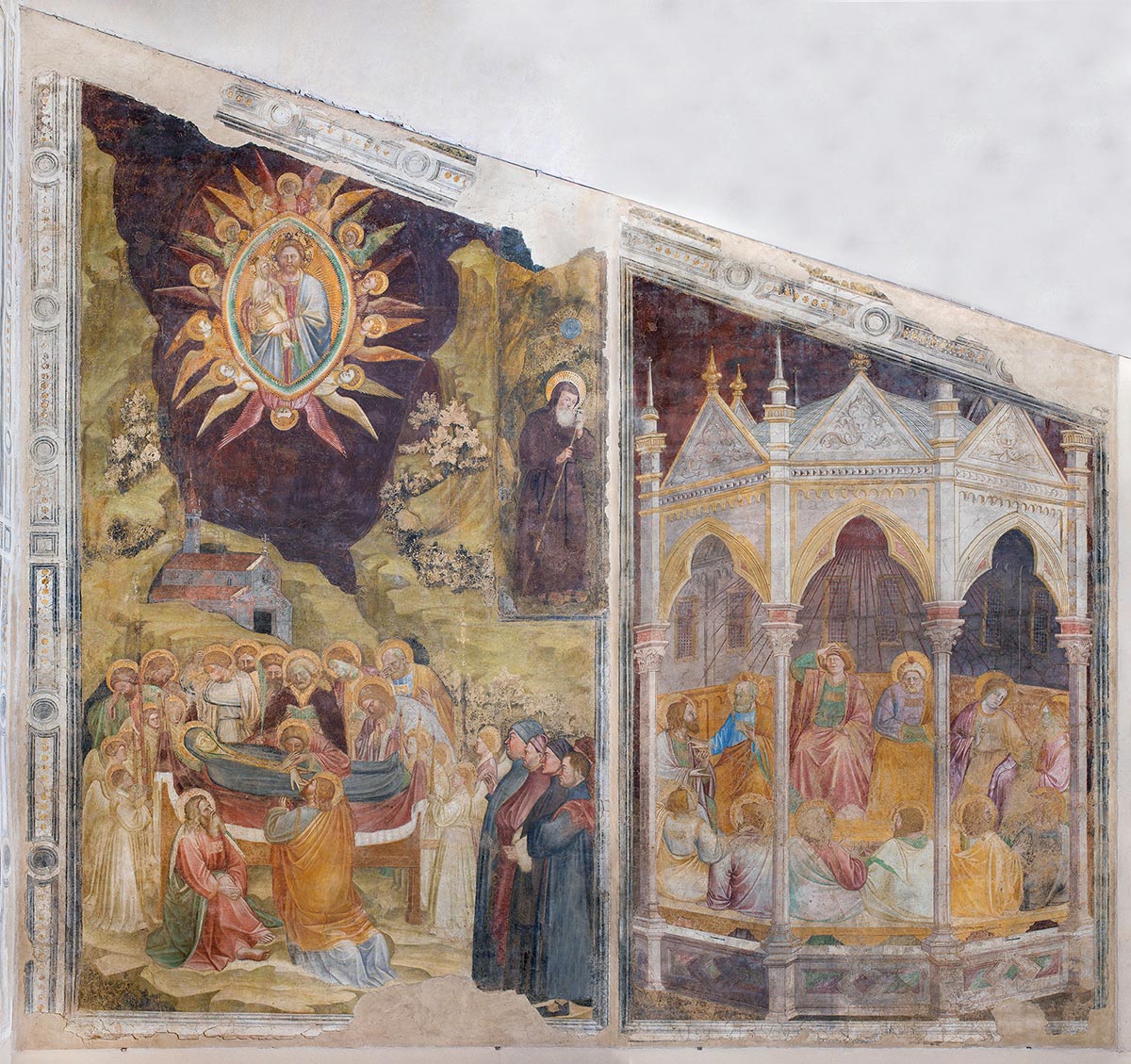
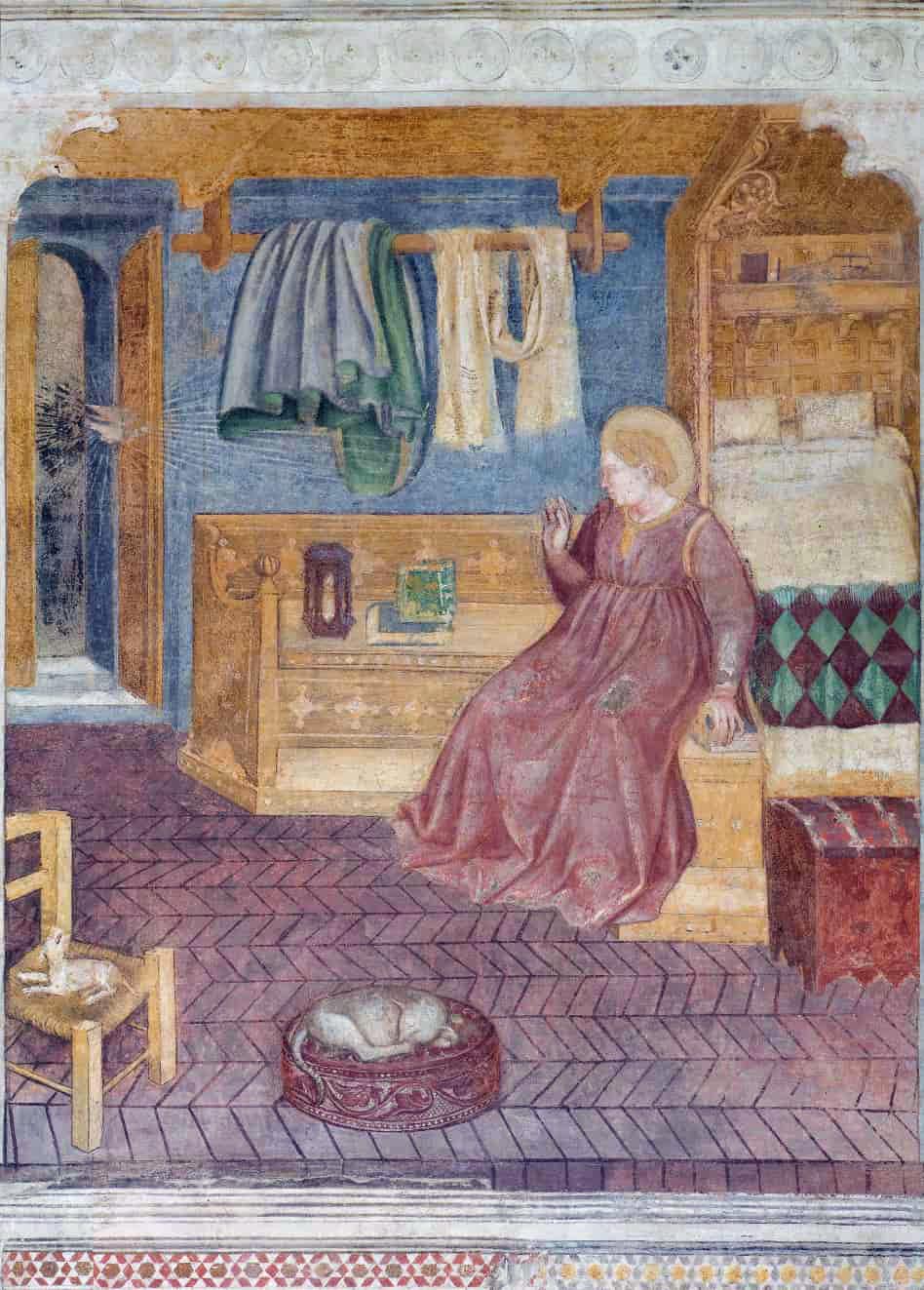
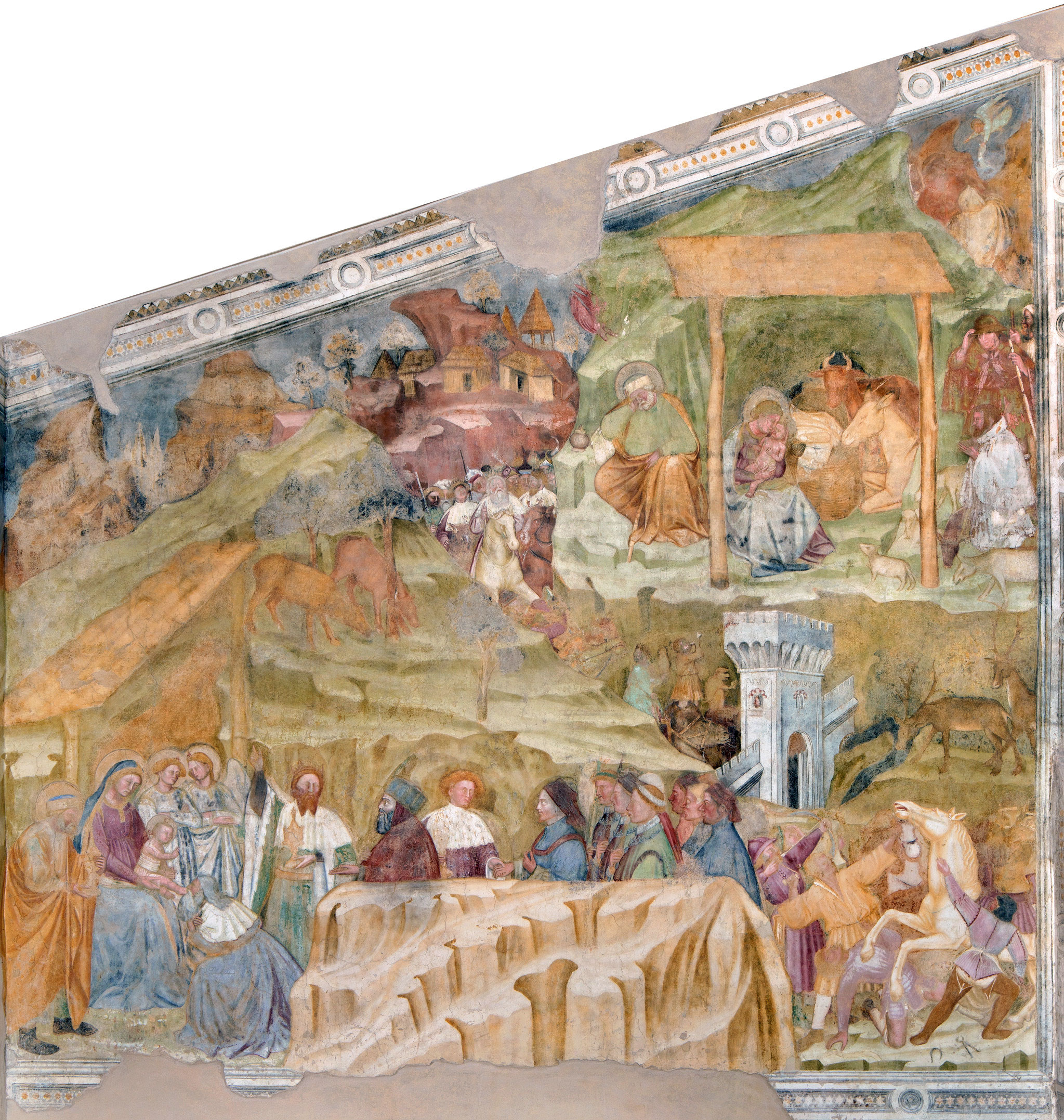
An inscription on the tombstone next to the figure of Saint Michael confirms the construction date, 1397, as well as the name of the commissioner, Pietro Bartolomeo de Bovi, and the name of the artist who created the frescoes of the chapel, Jacopo da Verona. The fresco cycle depicting the “Life of the Virgin” is divided into five episodes arranged counterclockwise: Annunciation, Nativity and Adoration of the Magi, Ascension, Pentecost, Death of the Virgin, and Saint Michael.
Beyond Giotto
The cycle in the Oratory of San Michele represents the final chapter of fresco painting in late 14th-century Padua. It brings to completion all the innovations introduced by Giotto:
- the fresco technique, which becomes increasingly refined
- the spatial and perspective research that leads to architectural illusionism
- the rendering of human emotions
- the introduction into sacred history of references to the political figures of the time, the patrons, and their families.
For example, in the procession of the “Adoration of the Magi,” you can recognize Francesco II Novello da Carrara in the figure dressed in red, with a long dark beard and a fur cap, and Francesco I da Carrara as the man behind him wearing a red hood. The figures watching the “Funeral of the Virgin” are also believed to represent members of the de Bovi family.
Attention to Daily Life
Jacopo da Verona dimostra di aver assimilato e rielaborato autonomamente i modi dei principali esponenti trecenteschi della pittura padovana: Giotto, Altichiero da Zevio, Giusto de’ Menabuoi, Jacopo Avanzi.
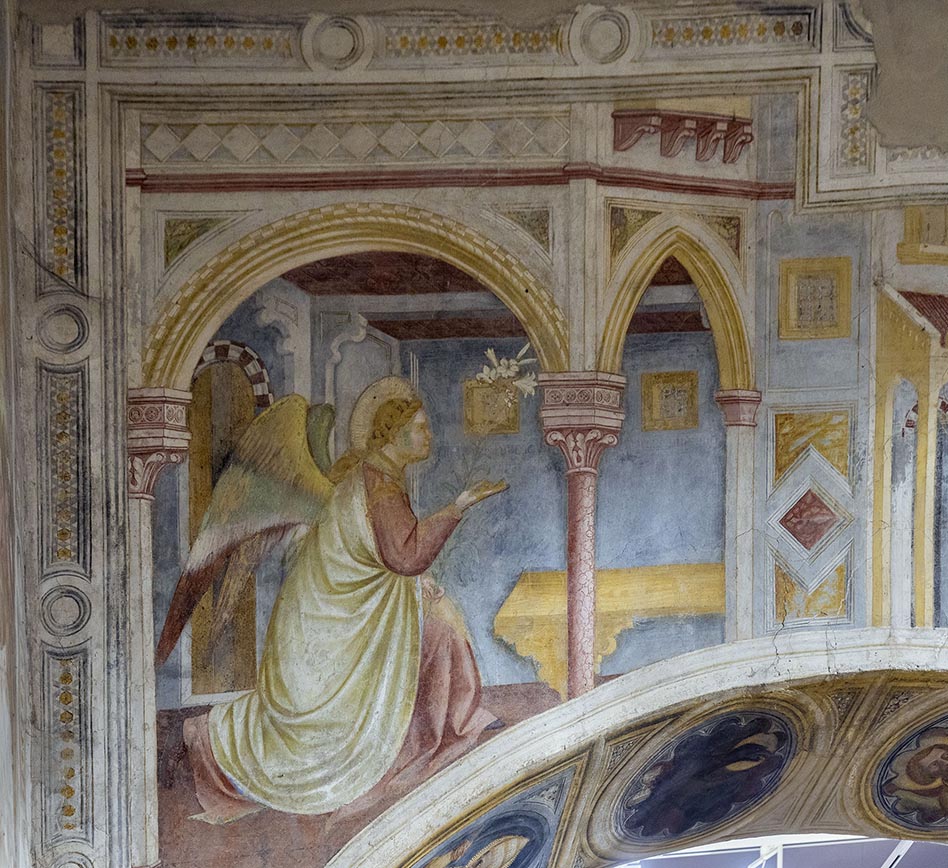
His language is marked by originality, focusing on naturalistic and portrait-like details (such as the animals in the “Annunciation” and the landscape in the “Adoration of the Magi”). This new style is infused with sacredness while also attentive to daily life and the figures of his time, already looking forward to the art of the new century.