
The Scrovegni Chapel in Padua and Giotto’s frescoes: a Western artistic masterpiece
The frescoed Scrovegni Chapel by Giotto is one of the reasons why there’s a regional saying “Venice the beautiful, and Padua her sister”.
Our city does, in fact, contain artistic and historic masterpieces to rival those in Venice.
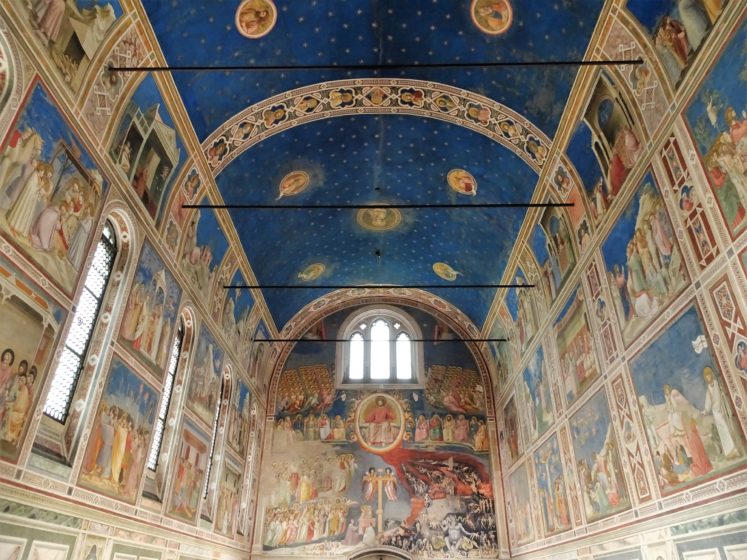
So if you find yourself in Padua and want to visit something that is truly unique, you absolutely have to visit this red-brick chapel. You will be left awestruck by the extraordinary circle of frescoes painted by Giotto between 1303 and 1305.
Under a magnificent star-studded sky, an emotional journey awaits you: immerse yourselves in a work of art that is recognised around the world as one of the masterpieces of Western art and set to become a UNESCO World Heritage Site. Come, take a look…

A journey through the history of the Scrovegni Chapel in Padua
It’s the year 1300. Enrico Scrovegni, a rich Paduan banker, buys the land which currently houses the Giardini dell’Arena (Arena Gardens), north of the historic centre of Padua, where you can also admire the remains of an Ancient Roman arena dating back the the 1st century.
Three years later he decides to build a chapel to atone for the sins committed by his father, who was so guilty of the sin of usury that he was given a place in hell in Dante’s Divine Comedy.
The banker entrusts one of the greatest artists of his time with the work of adorning the building: Giotto di Bondone, known simply as Giotto.
From Giotto’s images to the pages of Marcel Proust
What Giotto creates on the Scrovegni Chapel’s interior is well and truly a piece of visual storytelling composed of several scenes: from the story of the Virgin Mary’s parents, Anne and Joachim, until the death and resurrection of Christ.
The narration recalls periods of Mary and Jesus’ life including the Annunciation, the Baptism, the Crucifixion and the Ascension of Jesus, that all align themselves like pieces of photographic film into three narrative strips.
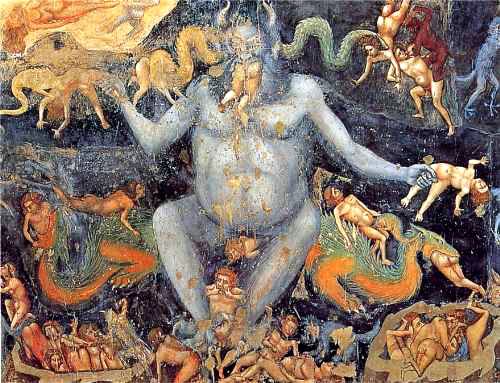
The grand scene of The Last Judgement, painted on the façade’s interior, concludes the story by artistically interpreting the biblical description of the Apocalypse.
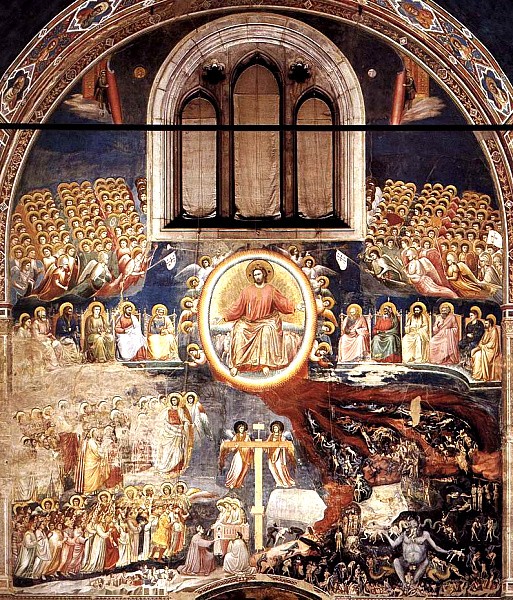
In the sky Christ the Judge, “whose face resembles the sun,” sits inside the centre of the rainbow, surrounded by the Angels.
Sitting on a throne under which lie depictions of the symbols of the Four Evangelicals, God’s gaze is turned towards the Blessed.
His right hand is open in a sign of welcome to the Righteous, whilst his left hand condemns and scorns the damned.
The lower level is a series of fake marbles and allegorical portrayals of the Virtues and their opposites, the Vices. It represents a sort of vademecum, or guide, of behaviour for Christians at the time.
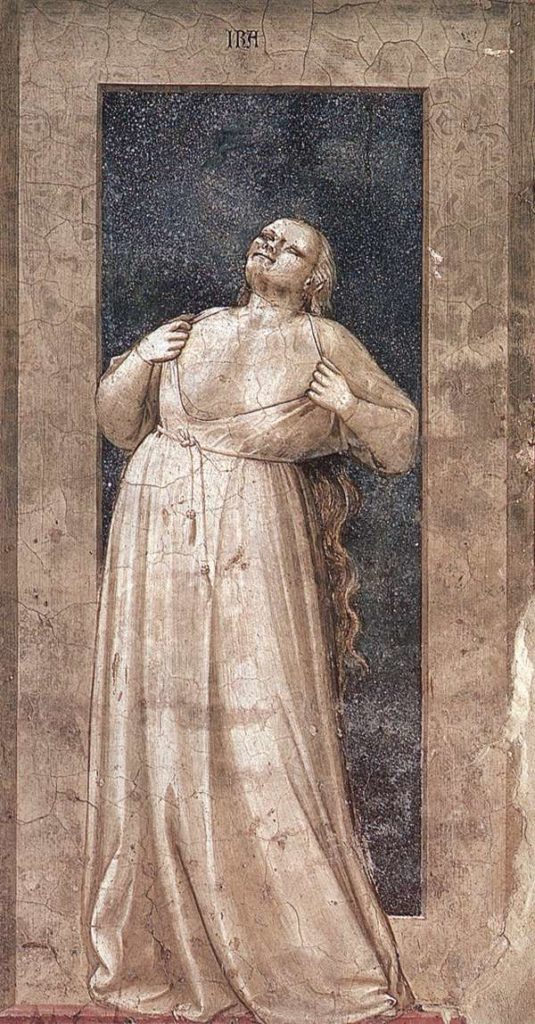
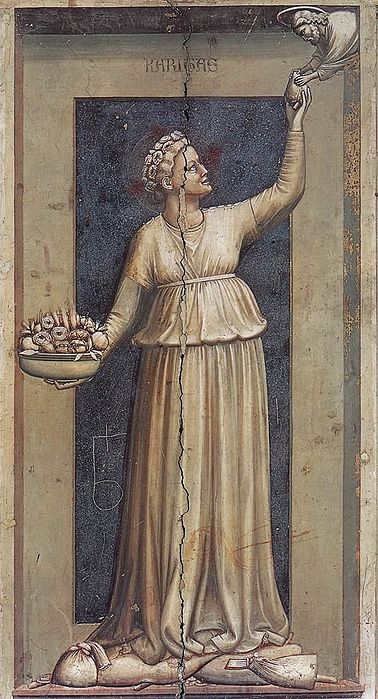
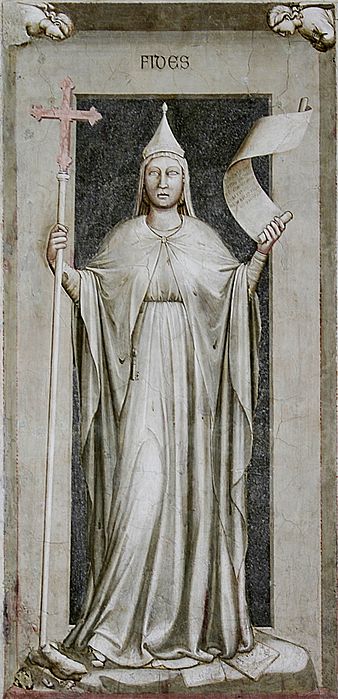
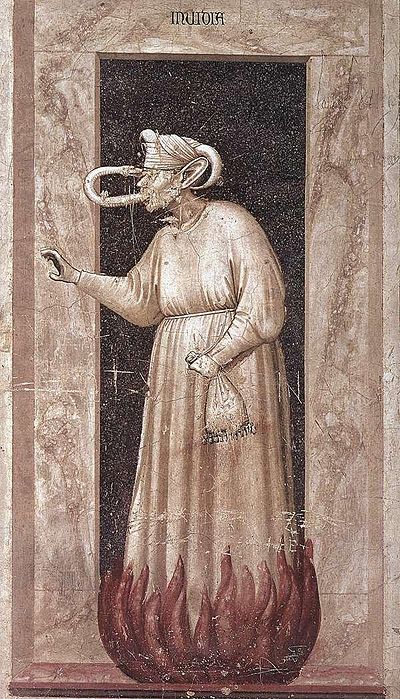
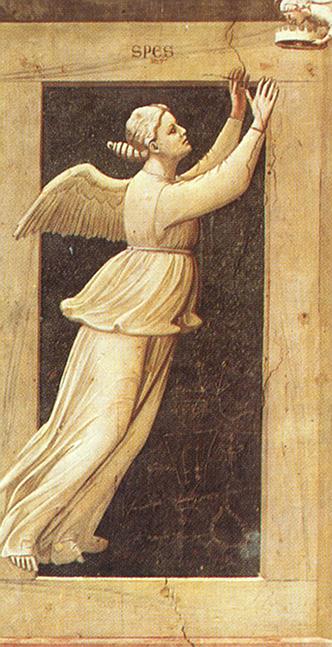
Marcel Proust even wrote about the Virtues and Vices. When he saw the Scrovegni Chapel in May 1900, Giotto’s frescoes left such an impression on him that he mentions them in the first pages of his most famous novel, ‘In Search of Lost Time’.
The magnificent star-studded ultramarine blue sky
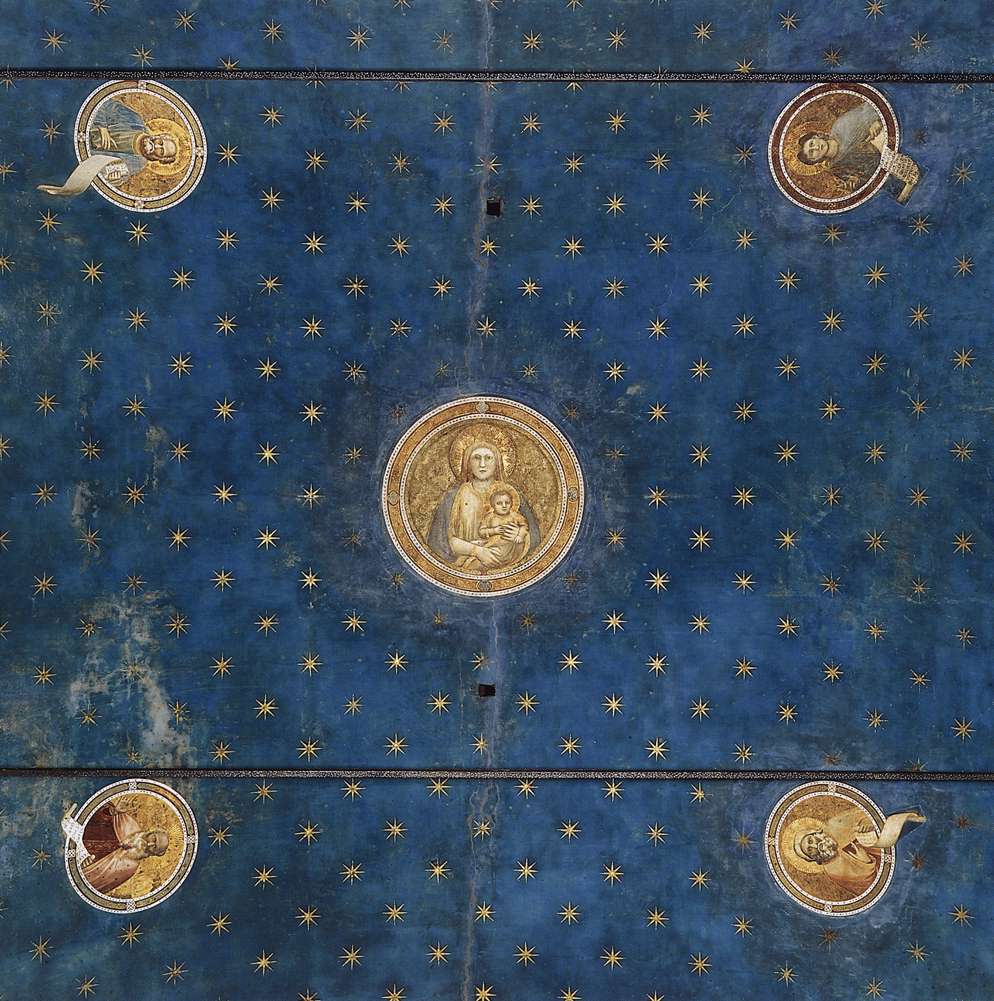
The Story of Salvation, painted along the walls of the Chapel, has a blue starry sky painted vault overlooking it that is divided into three decorative strips with ten round portraits.
The incredible colour palette of the masterpiece, like the expensive ultramarine blue, were made by Giotto using lapis lazuli and pigments that arrived in Venice from all over the Mediterranean basin.
Giotto in Padua creates an artistic revolution
In the cycle of frescoes in Padua by Giotto, he lets loose his creativity in the portrayal of places, costumes and time, making an ancient story come alive and feel like it’s today.
Every single detail, from the choice of the scenes to their arrangement, from the iconography to the setting – every single minute detail seems to have been studied in order to create references and ties between the Old and New Testament, between the sacred texts and the worshippers that visited the chapel on a daily basis.
The pictorial cycle, therefore, plays a double function: the decoration of the sacred building and the popularisation of the religious culture and Christian message.
The Scrovegni Chapel today
Little is known of the Chapel’s story until the 19th century, when it risked disappearing due to its new owners’ disinterest.
The intervention of the Council of Padua, that in the meantime had bought it (in 1881), served to avoid losing it. However, both the building and the frescoes were gravely damaged by then.
Radical refurbishment efforts were made particularly at the end of the 1800s and in the early 1960s. But more recently a new type of disrepair started to take place due to pollution, as the colour started to increasingly pulverise.
In 2000, the construction of the new modern structural entrance area, along with the installation of an air filtration and decompression system, allowed the management of the flow of visitors in a way that avoided damage and preserved the frescoes. Here, whilst you wait to enter the Chapel, you will be able to watch an interesting film that tells the story of this place of worship.
Ready to book your visit to this place of wonder?
Where it is
Scrovegni Chapel
Piazza Eremitani 8
Distance from Apartmentspadova: 1,8 km (see map)
Info
You need to make a booking in order to visit the Scrovegni Chapel.
Call centre: 049 20 100 20 (from Monday to Friday from 9am to 7pm and Saturday from 9am to 6pm, excluding Bank Holidays)
Website: www.cappelladegliscrovegni.it
Online booking
Photo via:
Scrovegni Chapel – by Hugo DK via Wikimedia Creative Commons
More: Wikipedia and Wikimedia Creative Commons (public domain)