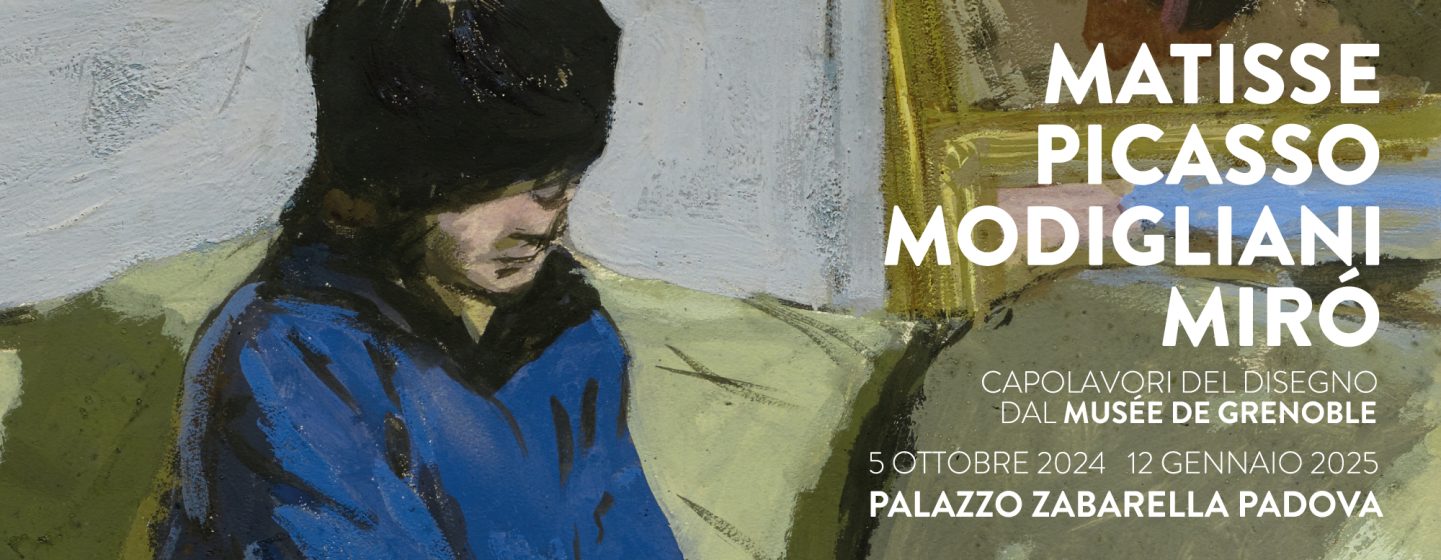
When: October 5, 2024 – January 12, 2025
Where: Palazzo Zabarella, Padua
In Padua, a Must-See Exhibition on Drawing Masterpieces
The Grenoble Museum has lent Palazzo Zabarella a significant selection of its rich collection of drawings, revealing a hitherto unexplored part of the collection; in this new exhibition, the best-known artists are mentioned in the title: Matisse, Picasso, Modigliani and Mirò.
Palazzo Zabarella in Padua thus continues its international dialogue with prestigious museums around the world. It is now the turn, in fact, of the Grenoble Museum, whose collection of early 20th-century French art is second only to the Centre Pompidou.
The museum boasts an enviable collection of masterpieces, making this an excellent reason to visit Padua—perhaps during the Christmas holidays.

Who Are the Key Figures of 20th-Century Art
Not Just Drawings: What You’ll See in the Exhibition
Matisse and Picasso: Why They Are the Two Main Figures of the Exhibition
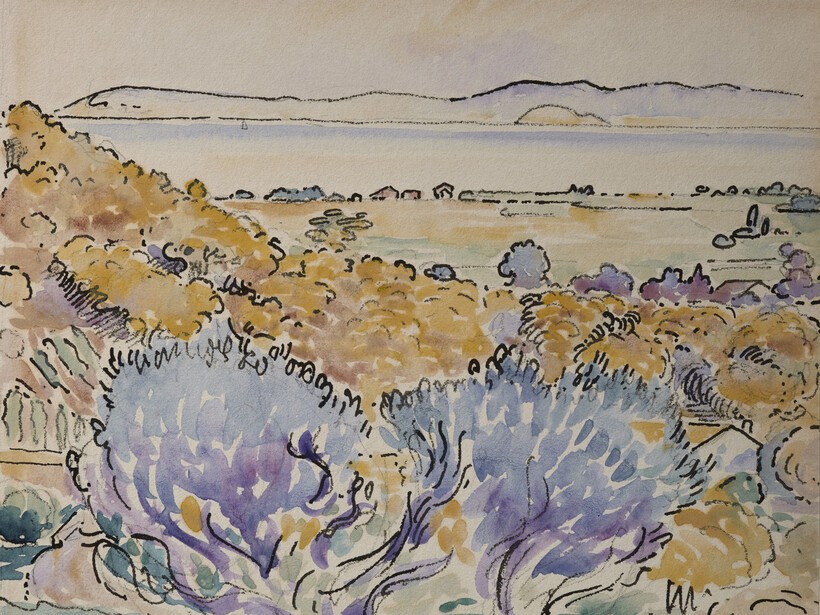
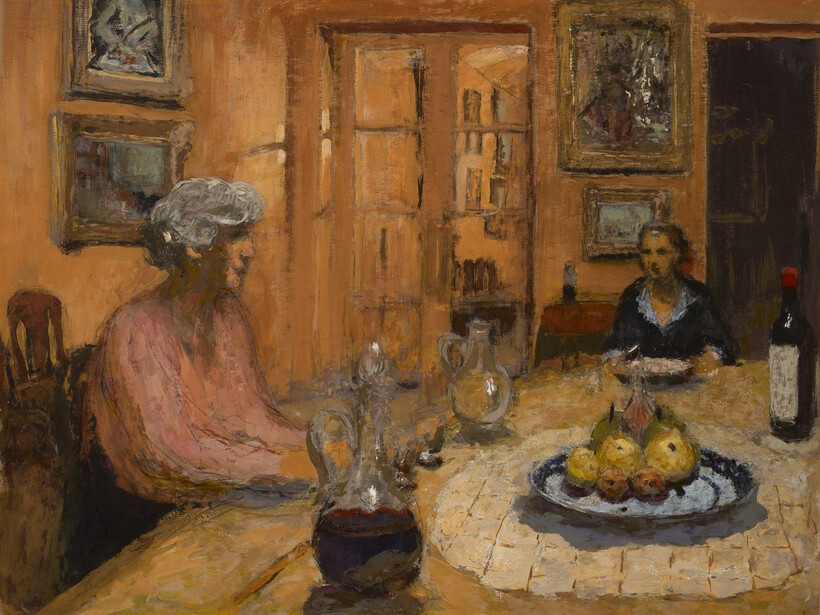
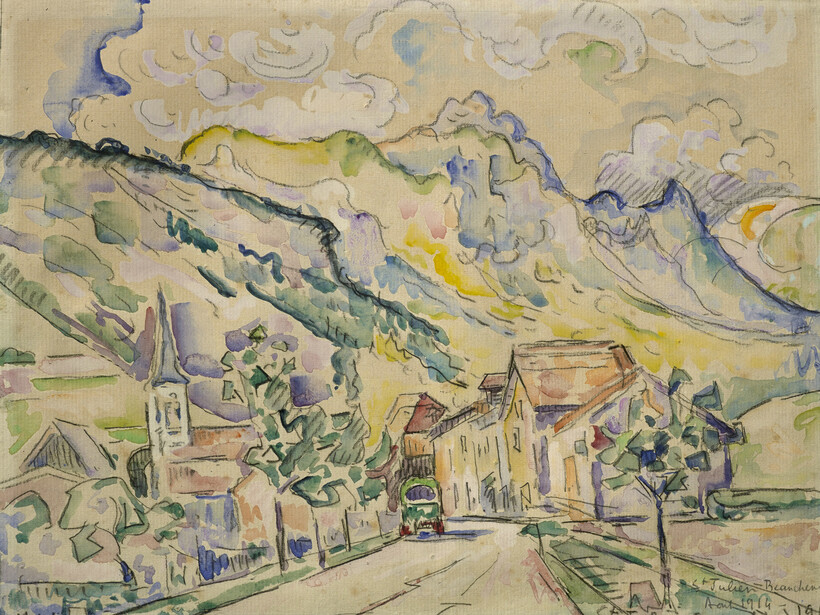
Some of the works on display at the “Matisse Picasso Modigliani Mirò” exhibition at Palazzo Zabarella in Padua (photo credits)
Who Are the Key Figures of 20th-Century Art
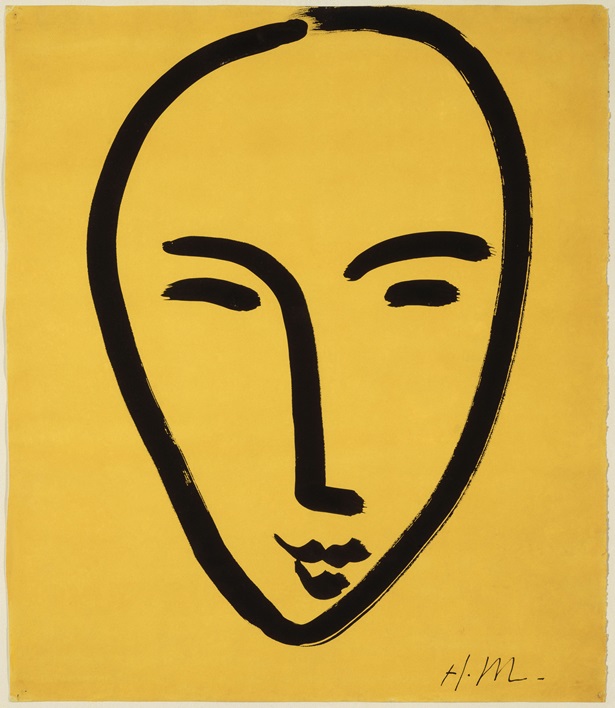
The exhibition features artists who revolutionized the depiction of reality in the early 20th century, exploring movements such as post-Impressionist avant-garde, Fauvist expressionism, Cubism, Dadaist rebellion, and the Surrealist dream.
Sono presenti opere di Matisse, Picasso, Chagall, Mirò, Modigliani, Signac, Bonnard, Vuillard, Rouault, Robert e Sonia Delaunay, Arp, Balthus, Cocteau, Artaud, Klossowsky, Michaux, Béöthy, Marcoussis and many others—a total of 47 artists and over 130 works. The paintings offer insight into the diverse techniques and varied visual languages of the 20th century.
Not Just Drawings: What You’ll See in the Exhibition
Although the subtitle of the showcase refers to “masterpieces of drawing,” this doesn’t mean it’s a monochrome exhibition. On the contrary, pastel, watercolor, tempera, gouache (a painting technique using a type of tempera made heavier and more opaque with the addition of white pigment), colored chalk, and collage, as well as the use of materials such as metals, gold leaves, and fabrics, create vibrant color combinations with expressive freedom and creative immediacy, introducing drawing to new, unprecedented dimensions.
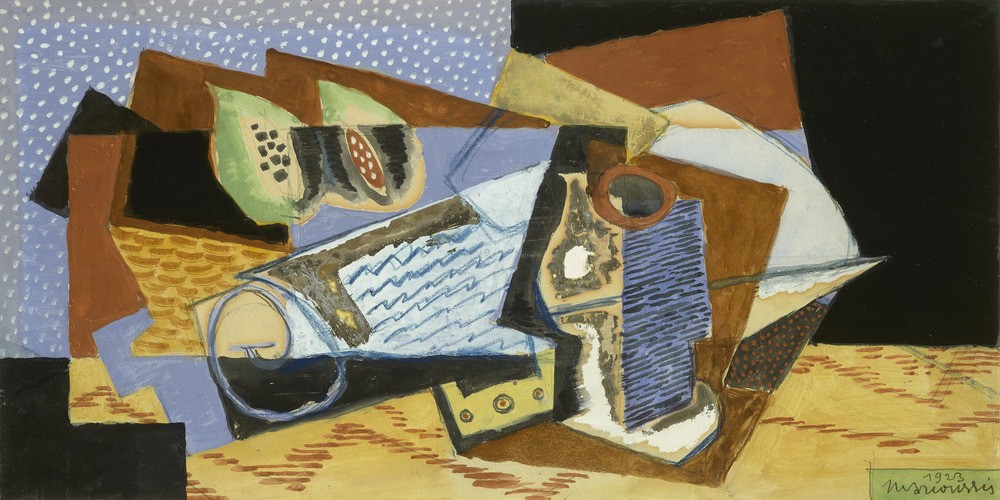
Matisse and Picasso: Why They Are the Two Main Figures of the Exhibition
Matisse and Picasso are the exhibition’s two main protagonists.
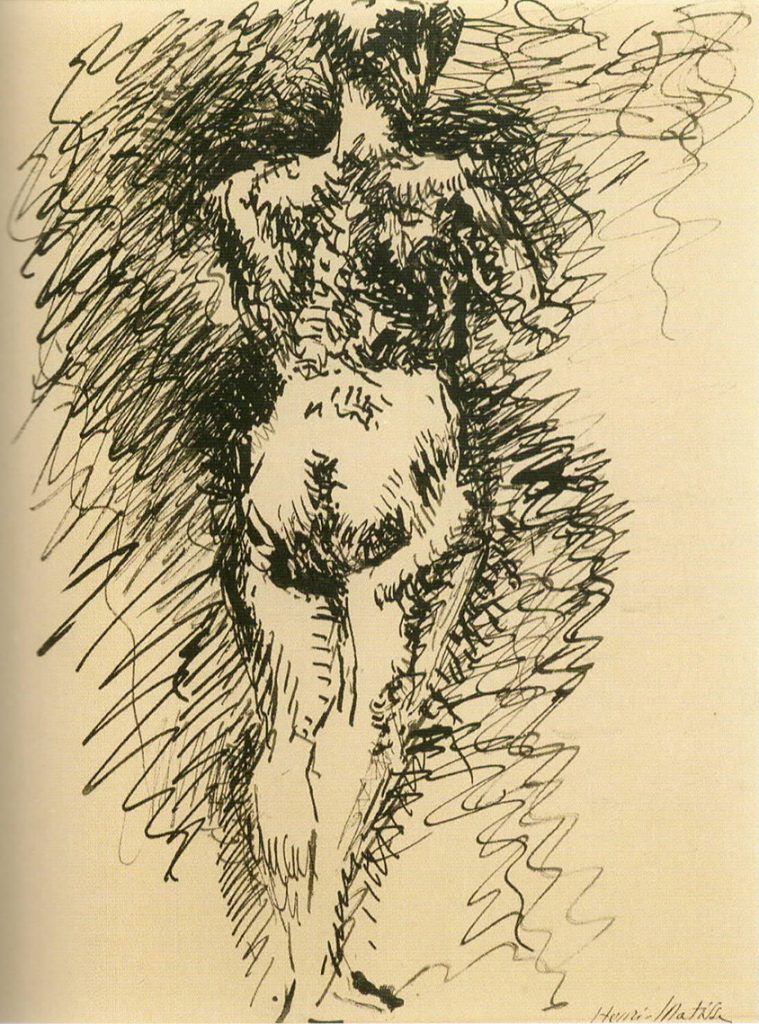
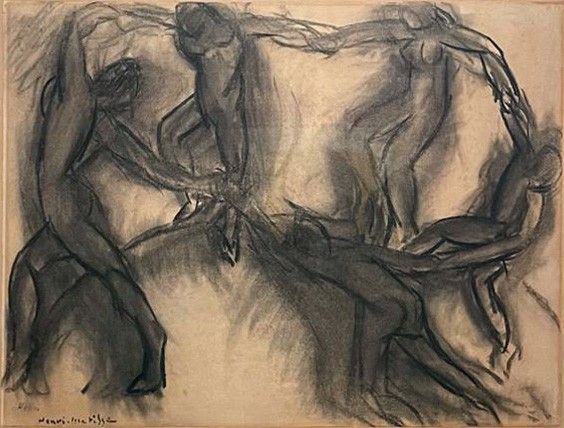
By Matisse, we can admire a series of drawings of female nudes from the early 20th century, among which the “Study of a Nude Woman from the Back” stands out. In this work, the artist develops a visual language based on a system of highly compact and condensed lines. We also find the charcoal drawing of the renowned piece “Dance,” closely linked to the two painted versions housed at the Museum of Modern Art in New York and the Hermitage Museum in St. Petersburg.
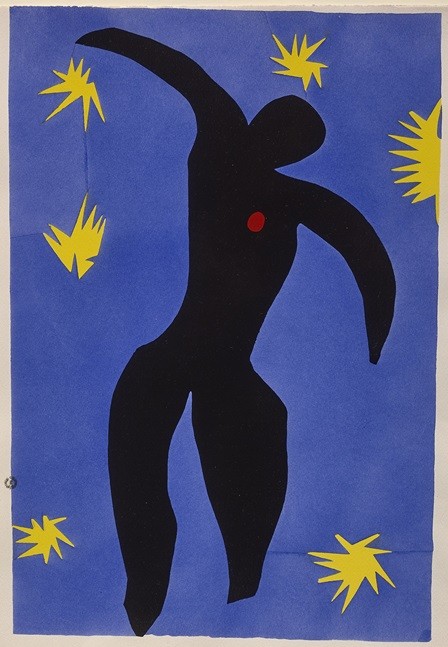
This work was created after the two paintings, with the artist offering a different interpretation through the drawing and charcoal technique. Without color, the bold and decisive charcoal strokes capture the movement of the dancers, while the soft shading enveloping their bodies contains this motion in its most tangible expression. We then arrive at the “Themes and Variations” series, created by Matisse in 1942, and the stunning “Jazz” series, a collection of lithographs made using the découpage technique.
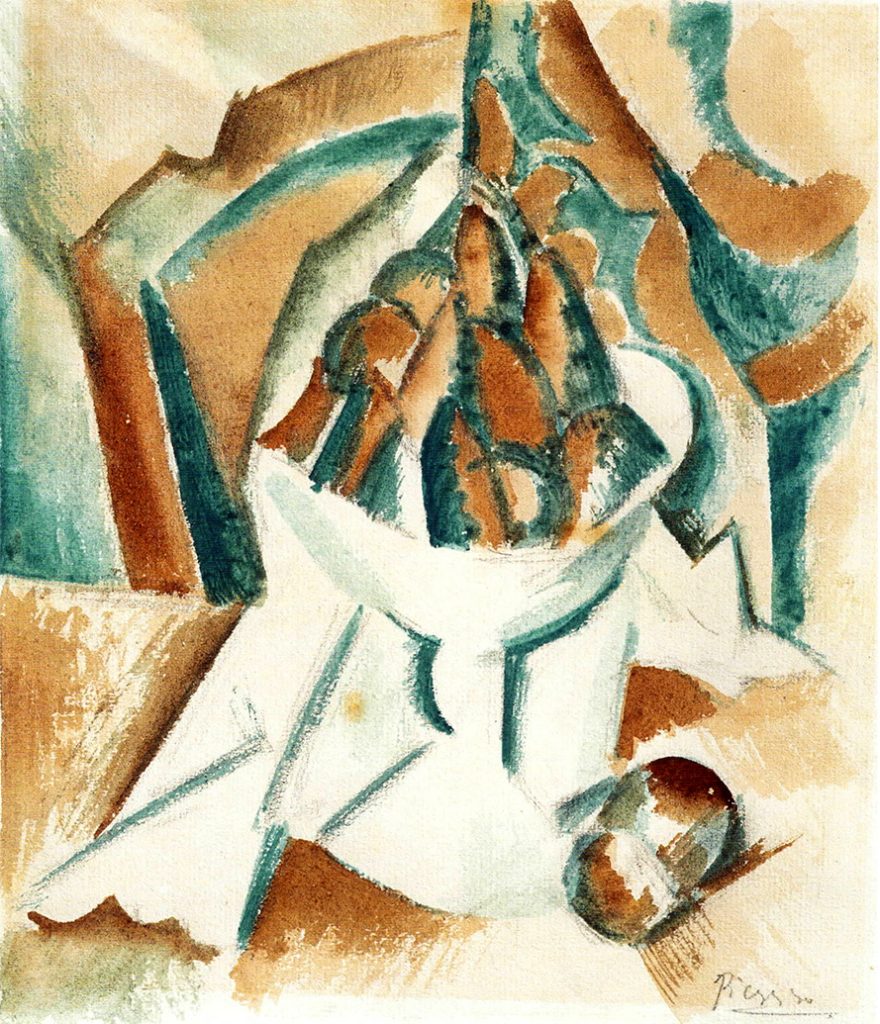
The series of works by Pablo Picasso from the Musée de Grenoble is also remarkably substantial. It begins with the stunning “Study of a Nude Man with Raised Arms” from 1902, where Picasso’s extraordinary ability to convey emotions, to suggest a physiognomy, and to depict a character with just a few strokes is already evident. This is followed by the beautiful watercolor titled “Fruit Bowl”, representative of the early phase of Cubism, in which objects are reduced to geometric volumes, light is integrated into the form, and traditional perspective is replaced with a denser spatial arrangement.
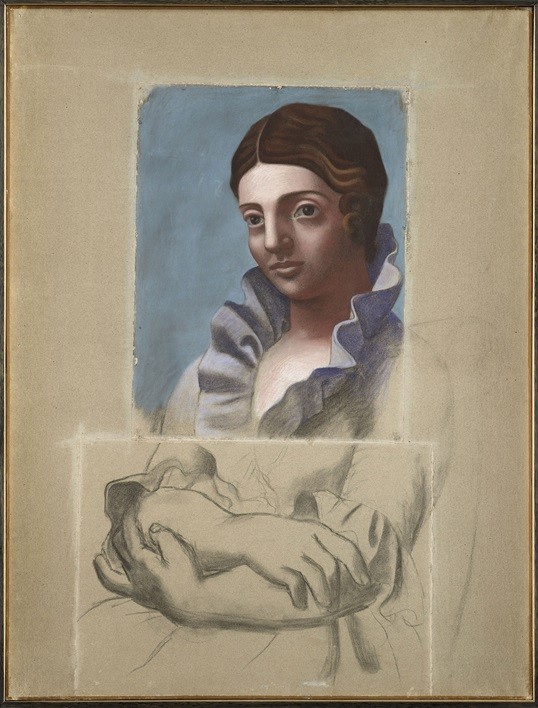
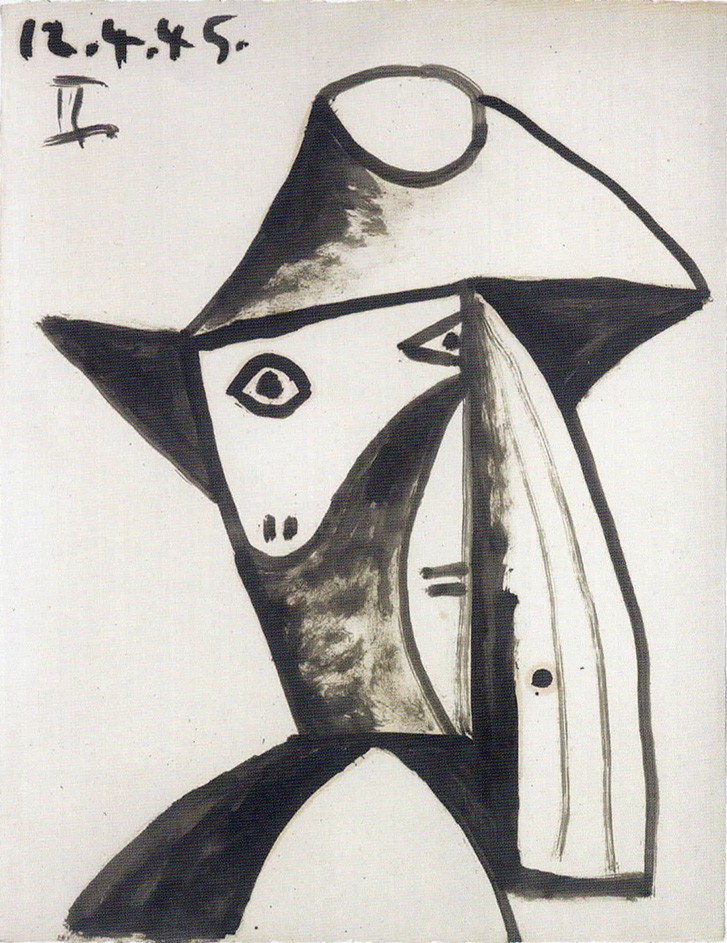
Following Glass, a Cubist masterpiece of collage, we arrive at a work from Picasso’s Neoclassical period (1917–1925), the magnificent “Portrait of Olga” from 1921. Created using pastel and charcoal, Picasso portrays ballerina Olga Khokhlova, who would become his wife and the mother of his child. Completing this section is the “Woman with a Hat” series from the 1940s, variations on the theme of the fragmented female face. Here, using the beautiful visage of Dora Maar as his sole subject, Picasso deconstructs, separates, and merges the elements that compose her image.
Modigliani and Mirò: Two Great Talents but Two Opposite Destinies
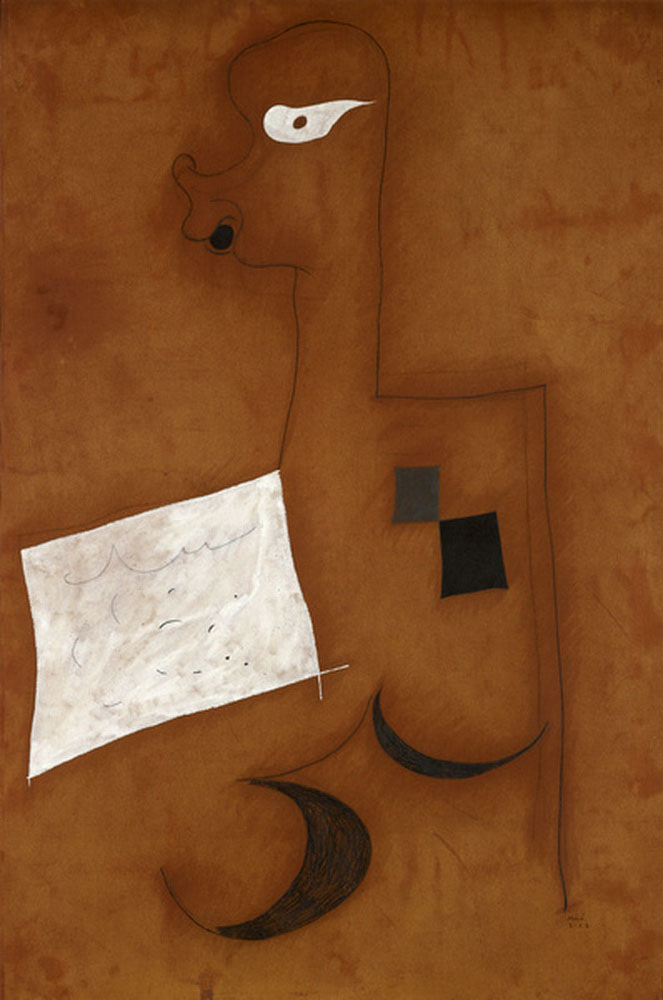
Mirò‘s work “Figure with White Rectangle” stands out, part of the “Dream Paintings” series created between 1925 and 1928, during a period when the artist was agreed by the Surrealists and exhibited alongside them. The dreamlike nature of these paintings is conveyed through large monochromatic studies featuring unusual marks and shapes drawn from the unconscious. This was a crucial phase in Mirò’s career, at a time when, according to the artist himself, he was “breaking free from all pictorial conventions.” These works garnered significant interest, and this particular piece from 1928 entered the Musée de Grenoble a few years later, thanks to the generosity of his dealer, Pierre Loeb.
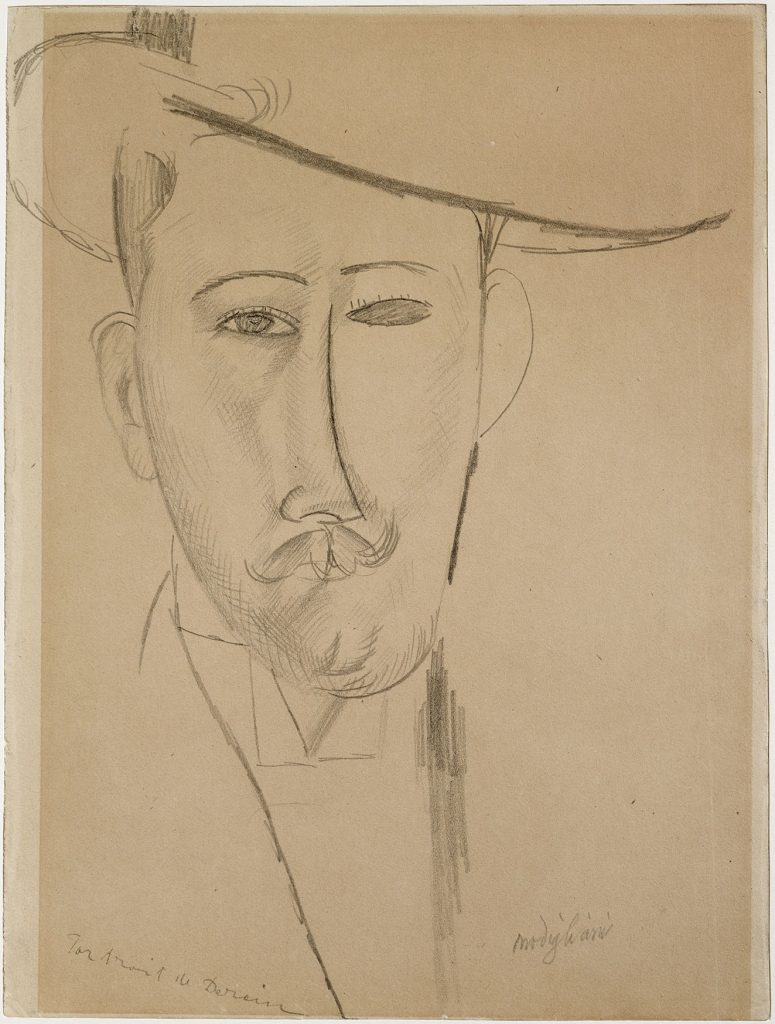
Modigliani drew extensively, both as studies for paintings and, more simply, as independent drawings. Unlike Mirò, whose artistic career was a guaranteed success, Modigliani was an artist who experienced no fortune during his life. Much has been said about his troubled and disordered life, his premature death in 1920, followed by the suicide of his young companion Jeanne Hébuterne. What might not be known, however, is that the Musée de Grenoble was the first institution in France to acquire a Modigliani painting in 1923, and in the years that followed, five of his extraordinary drawings. The exhibition features three portraits. Among these, “Portrait of a Man” is probably a study for “The Couple”, which is housed at the Museum of Modern Art in New York. Modigliani’s lines are precise and fluid: they outline the contours of the faces, emphasize features and characteristics, and evoke, in just a few lines, the details of clothing.
Useful information for visiting the “Matisse Picasso Modigliani Mirò”
Where the exhibition is located
Palazzo Zabarella
Via degli Zabarella, 14
Distance from ApartmentsPadova: 1,4 km (see map)
Opening hours of Zabarella
Tuesday to Sunday: 10:00 AM – 7:00 PM
Ticket office closes at 6:15 PM
Closed on Mondays and December 25
Open on Monday, December 30, and January 6
Info and bookings
Phone: (+39) 049 87 53 100
Website: www.zabarella.it/en/
Email: info@palazzozabarella.it
PAST EVENTS